

Using materials and resources more efficiently
Find out more about this key topic at BAU 2027. The world’s leading trade fair for architecture, materials and systems will take place in Munich from January 11–15, 2027.

Key points at a glance
From demolition to a culture of renovation: Preserving buildings instead of tearing them down conserves space, gray energy, and tied-up resources for future generations. Because of this, existing buildings are becoming more important than new construction.
The material makes the difference: Renewable raw materials, advanced conventional building materials, and hybrid construction methods all have an impact on the climate, supply chains, and the health of residents. The choice of materials is therefore no small matter.
The cycle needs data: Anything that isn’t documented can neither be reused nor recycled. With the Digital Product Passport, the materials registry, and specialized platforms, the infrastructure is currently taking shape for a truly circular construction industry.
On July 24, 2025, Earth Overshoot Day once again set a grim record. That was the day by which humanity had mathematically exhausted its annual budget of natural resources. Everything that is consumed after that will not be available for future generations. Depending on the standard of living and economic conditions, this point in time occurs a few months earlier or later for individual countries. When the calculation was first made in 1971, this day fell on December 29.
Since then, global consumption of raw materials has increased significantly. This is due, on the one hand, to a lifestyle that consumes more natural resources and, on the other hand, to the growth of the world’s population, which has doubled over the same period. Like many other industrialized nations, Germany is facing the challenge of significantly reducing consumption. Recent material shortages and disruptions in supply chains have highlighted the urgent need for a more resilient procurement strategy.
The sustainable use of existing resources requires a shift in mindset among all those involved in construction: The use of recyclable, renewable, or sustainably sourced materials and raw materials is just as important as new production processes that reduce the emissions and energy intensity of traditional building materials.
From Sufficiency to a Renovation Culture
There is no single formula for managing resources. There are many approaches in the construction industry, and they are all valid. In recent years, the balance has changed. Existing buildings are now becoming more important than new construction—and this is also changing the way we think about materials and resources.
Efficiency, Sufficiency, Consistency
Sustainable development in the construction industry can be achieved through various strategies at different levels. The three basic strategies of sustainability play a key role here: efficiency, sufficiency, and consistency. The efficiency strategy aims to reduce inputs while maintaining the same output, while the consistency strategy focuses on developing durable and sustainable products. Sufficiency strategies, meanwhile, challenge usage-specific consumption patterns in terms of “less” and “enough” in order to enable social justice within planetary boundaries. In the building sector, sufficiency addresses, among other things, the reduction of per-capita space requirements, the prioritization of existing uses over new construction, the adaptability and flexibility of spaces and buildings, as well as adapted usage behavior. The low-tech approach can be implemented in terms of design and building services through simple construction methods, lower fit-out standards, and energy-saving user behavior.
A recent study by the Technical University of Munich illustrates what sufficiency in housing construction can mean in concrete terms. More compact floor plans with a smaller grid size could reduce construction costs by about 6% and the embodied carbon emissions of the structure by about 10%. At the same time, it is possible to keep base rent lower without significantly compromising living standards.
Resilience and Adaptability of the Built Environment
Today, not only do buildings have to be constructed in a way that conserves resources, they also have to be resilient to the effects of climate change. Heavy rain, heat waves, flooding—these kinds of extreme events are happening more frequently, putting pressure on the construction industry to come up with solutions. A recent Prognos study commissioned by the Central Association of the German Construction Industry highlights the urgent need for action. By 2035, investments of between EUR 137 and 237 billion will be required for structural climate adaptation, with up to EUR 63 billion needed for heat protection alone.

Robust construction, green roofs, permeable surfaces, and the promotion of biodiversity in the neighborhood are no longer just extras, but are part of forward-thinking planning. Buildings designed today without taking climate risks into account will be difficult to operate, insure, and market in the future.
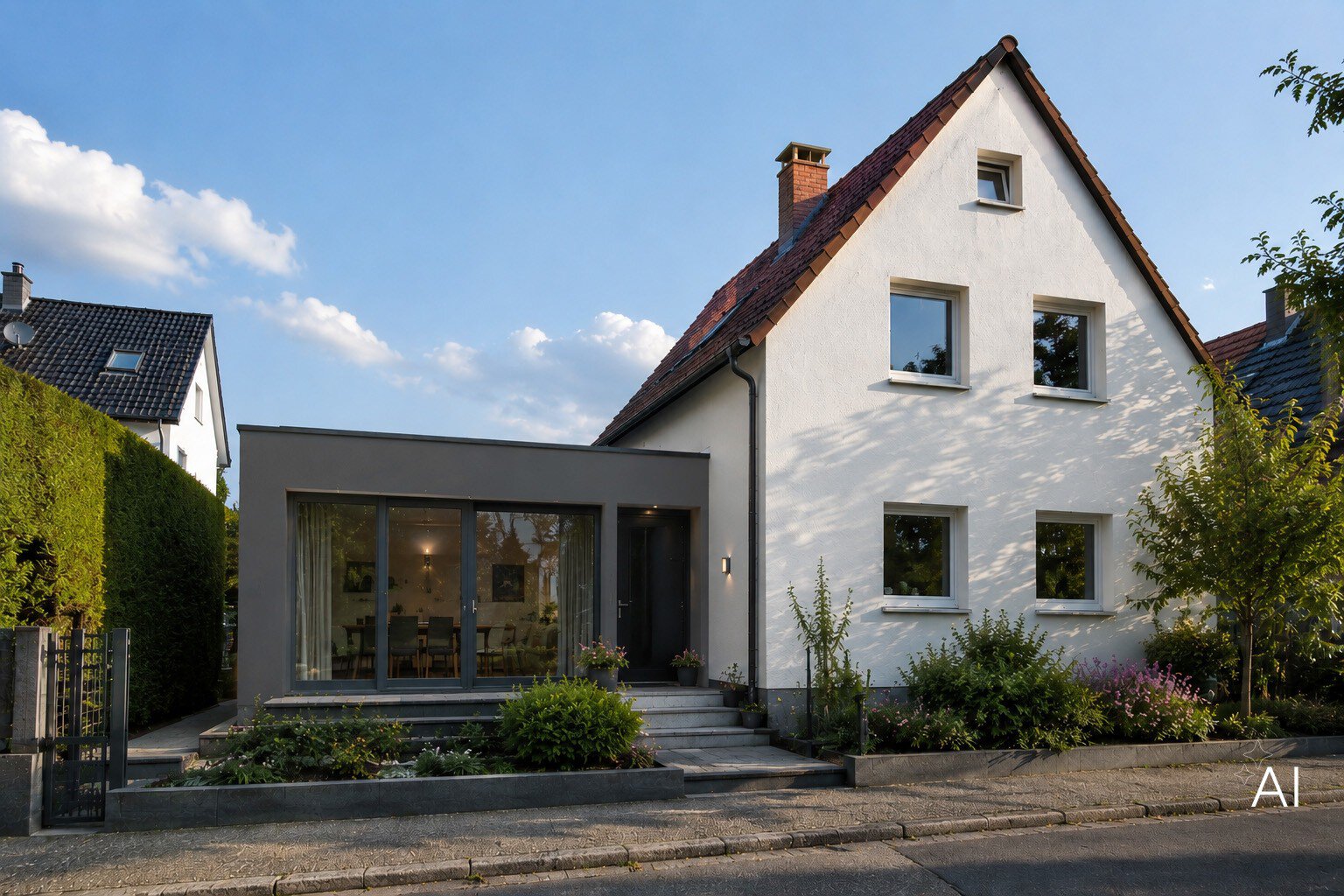
Renovation Culture: Existing Structures Over New Construction, Adding Levels
The ongoing cycle of demolition and new construction leaves a clear mark. In 2022, construction and demolition waste accounted for more than half of all waste generated in Germany. At the same time, new land is being used every day, at a rate of 51 hectares per day on average between 2019 and 2022. Neither of these facts are compatible with the resource targets set by the construction industry itself.
It is time for a paradigm shift: preserving, renovating, and continuing to use existing buildings rather than building new ones. It’s not just about materials. When you preserve a building, you also preserve the embodied energy it contains—in other words, the total energy expended in the production and logistics of the building materials. As operations become increasingly decarbonized, this share of the life cycle continues to grow in importance. Survey data from a paper by the German Federal Environment Agency (UBA) shows that this transformation also has cultural implications, finding that 88 percent of the population believes that buildings should be assessed for quality and renovation potential before being demolished. Skepticism toward the primacy of new construction has been present in society for a long time, but the legal framework has yet to catch up.
Materials, Construction Methods, and Healthy Building
The way buildings are constructed has implications that go far beyond structural stability, functionality, aesthetics, and cost. The choice of materials has an impact on the climate, on supply chains, and, increasingly, on the health of the people who live and work in buildings.
Natural and Renewable Raw Materials
The use of renewable, regional, and local raw materials as well as old construction methods that are already known about plays a central role in promoting resource-efficient construction methods. In addition to wood, bamboo, hemp, flax, and straw, which bind CO₂ during their growth, other raw materials also offer environmental and economic benefits, as they are available locally and thus have an impact on supply chains and transportation routes. In many regions, clay is produced as a byproduct of gravel and sand extraction.
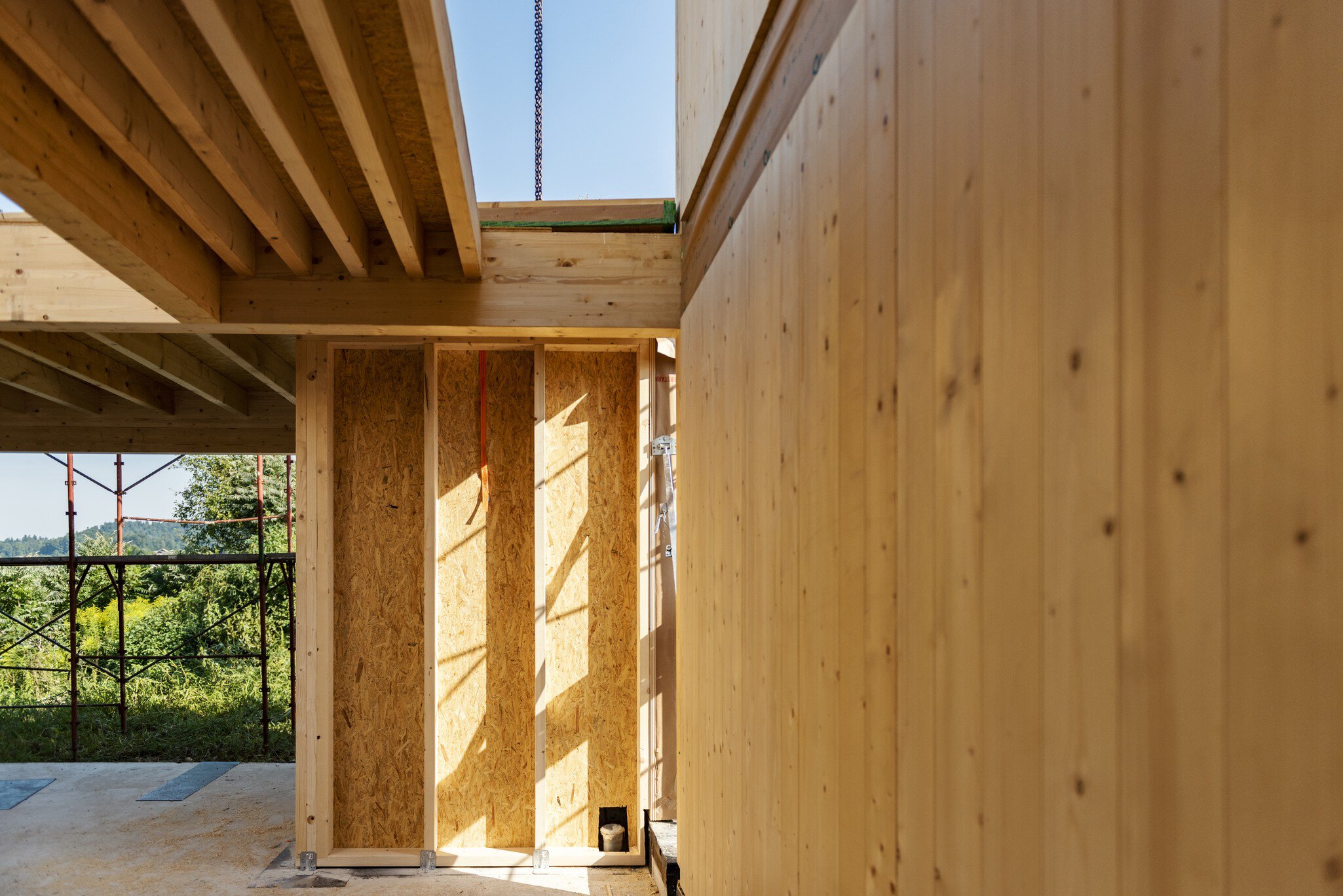
Clay actively regulates the indoor climate through its sorption capacity, and it can be reused as often as necessary by adding water. Lime and silicate have proven themselves over the centuries as breathable and durable binders for plasters and paints. When it comes to insulation, renewable raw materials such as wood fiber, hemp, flax, cellulose, and sheep’s wool offer a wide range of solutions with a positive environmental footprint. However, this advantage only pays off in terms of a good overall environmental footprint if the products are locally sourced and thus have short transport distances.
Further Development of Conventional Building Materials
Although concrete and steel are responsible for a significant portion of global CO₂ emissions, their material properties make them indispensable in the construction of buildings and infrastructure. Current developments show that the CO₂ balance can be improved by substituting clinker with materials such as fly ash or granulated blast furnace slag. Research on carbon concrete and gradient concrete also demonstrates potential through material reduction and the targeted control of material properties. These not only enable new forms of architectural expression, but also help to reduce the life-cycle costs of buildings and minimize their environmental impact.
The C-Factory in Leipzig demonstrates just how widespread confidence in this technological direction already is. The world’s first pilot plant of its kind is designed to manufacture carbon-fiber-reinforced concrete components under industrial conditions. Not only do these materials store CO₂, but they also reduce its emissions—thanks to the combined effect of low-CO₂ cements, treated recycled aggregates, and eco-friendly carbon fibers.
Hybrid Construction Methods and Construction by Material Type
Hybrid construction methods combine the beneficial properties of individual materials and components. The result is materials with optimized properties, such as greater strength and load-bearing capacity combined with lower weight. The prefabrication of wood-hybrid elements, for example, enables quick and precise assembly on the construction site, shortening the construction time. Another advantage is the return to a material cycle. Practice shows that single-origin material is the result of constructional logic. This means that the materials must remain clearly separated, the load transfer must be organized in a transparent manner, and structural components such as columns, beams, and floor elements must be dimensioned in such a way that they can later be shortened, adjusted, and reused. Dismantlability depends less on the individual materials than on the chosen component size and the simplicity of the design.
Healthy Building: Material Quality and Well-Being
People spend up to 90 percent of their time indoors. The quality of the air they breathe has a direct impact on their health, concentration, and well-being. Building materials, coatings, flooring, and adhesives can release volatile organic compounds (VOCs), formaldehyde, and other pollutants. These substances are often released from building materials over the course of years; they are barely visible, but they effectively pollute the indoor air. Healthy building therefore starts with the choice of materials. Solvent-free paints, low-emission, wood-based materials, and non-toxic adhesives and sealants measurably reduce indoor pollution levels. Certifications such as the German Blue Angel ecolabel or the AgBB scheme provide reliable guidance in this regard, as they assess not only individual substances but also a product’s emissions under real-world conditions.
Energy: Efficiency and Renewable Sources
The way buildings are used and operated has a direct impact on resource conservation, for example through durable, sustainable structures, the efficient use of renewable energy, optimized building envelopes, and smart building technology. The European building sector is currently responsible for about 36 percent of energy-related greenhouse gas emissions and about 40 percent of energy consumption in the EU. With the revised EU Energy Performance of Buildings Directive (EPBD), Europe has established a legally binding framework for decarbonizing its building stock by 2050. The key new concept is the zero-emission building, which will be a mandatory standard for all new construction as of 2030. Here, energy needs are to be met primarily through renewable sources located at or near the site, such as photovoltaic systems, solar thermal systems, geothermal energy, or heat pumps. In addition, a mandatory solar installation requirement will be introduced, which will take effect in phases starting at the end of 2026. A life-cycle assessment will also become mandatory in the future. Starting in 2030, it will be necessary to report life-cycle greenhouse gas emissions for all new buildings and to meet emission limits.
Circular Construction: From Planning to the Urban Mining
The concept of circular construction stands for a paradigm shift in the construction industry: away from the traditional linear economy (make, take, waste) toward a sustainable circular approach (reduce, reuse, recycle). This not only conserves resources but also opens up new value chains and business models in the industry. Tools such as the AI chatbot from the IBA’27 Circular Construction Hub offer practical support for getting started, and assist professionals and building owners with specific questions regarding material selection, reuse, and demolition planning.
Design for Disassembly: Planning for Material-Specific Dismantling
Circular construction requires not only recyclable building materials and components, but also a different approach to planning as well as construction by material type. Design for disassembly is a key prerequisite for ensuring that materials can actually be returned to the cycle at the end of their useful life. In this sense, each building serves as a store of resources. The strategy behind “design for disassembly” is to design buildings from the outset in such a way that these resources remain accessible at the end of their useful life. In practice, this means utilizing detachable rather than glued connections, clearly separating materials rather than mixing them, and ensuring complete documentation of all installed components.
The biggest obstacles to future reuse are composite materials, adhesives that are difficult to separate, and undocumented component layers. Several guidance documents are now available to assist with implementation in planning practice. In 2024, the LUBW Baden-Württemberg published the practical guide “Successfully Implementing Circular Construction,” while the Berlin Chamber of Architects published the guide “A for Circular.” In May 2025, KIT and the Technical University of Munich published guidelines on the reuse of load-bearing structural elements made of steel and wood, which are intended to serve as the basis for a general building authority approval.
At the End of the Life Cycle: Dismantling and Material Recovery
Selective disassembly is essential for ensuring that materials can be returned to the cycle. High-quality reuse is only possible through sorting by component, layer, and material fraction. In this context, it is not only the “how” but also the “when” of the dismantling that is crucial. A systematic inventory survey conducted before the start of demolition work identifies which building components and materials are suitable for reuse and which hazardous substances have to be removed in advance.
A current research project at RWTH Aachen University based on the concept of the material recovery right (MRR) shows that this effort can also be economically viable. In this approach, building materials are recorded as independent assets via tradable certificates—separate from the building ownership, with binding demolition instructions and an economically assessed residual value. The building thus serves as designated store of resources. Applying the approach to a real-world construction project shows that if materials are reused rather than sent to landfills, the circularity score of the facade under study increases by over 60 percent. However, without complementary policy frameworks, the economic viability of decommissioning remains a major hurdle.
Recycling, Upcycling, and Urban Mining
German standards, concrete may contain a maximum of 45 percent recycled aggregate, and even then only for certain applications. In Switzerland, 100 percent is permitted. As long as new raw materials have to be added to maintain the original quality, the cycle remains open. True recycling—and especially upcycling, i.e., reusing materials at the same or a higher quality level—is still the exception in the construction sector.
Heidelberg demonstrates that the economic cycle of materials can function not only at the raw material level, but also as an “urban mine” on a city-wide scale. During the conversion of a former barracks site, 466,000 tons of construction materials were systematically recorded in digital format—with the goal of achieving a 90 percent reuse rate. There are also pragmatic reasons why such approaches are emerging. In many places, it is becoming more difficult to source even basic mineral raw materials, and the disposal of construction waste is becoming more expensive and time-consuming. Urban mining therefore fills two gaps—on both the supply side and the disposal side. There is great potential, but it remains largely untapped. Currently, approximately 77 million tons of aggregate are produced in Germany each year from demolition materials, which accounts for just 13 percent of total demand.
Material Passport, Databases, and Digital Resource Management
To achieve an effective circular economy, it is necessary to ensure transparency regarding materials and resources, and to establish a system for tracking and optimizing their use throughout their entire life cycle. A materials register is a detailed list of all materials and products used in a building, including information on quantity, location, condition, and environmental impact. Informed decisions on maintenance, refurbishment, dismantling, or recycling can only be made once the materials used have been precisely recorded.
The building resource passport goes one step further and provides comprehensive documentation of a building’s material and resource efficiency, including detailed information on the origin, composition, reusability, and recyclability of the building materials used, as well as the energy efficiency of the building.
However, these passports are only effective if they are based on robust data structures and are maintained throughout the entire building lifecycle. This is where specialized platforms come into play. Madaster, for example, enables building materials to be recorded, managed, and assessed in a building-specific database, while also serving as a foundation for providing product data relevant to the circular economy—such as in the context of selective demolition or the planning of circular material flows. In the research project “BIM and IoT-Based Traceability of Construction Products,” Madaster was explicitly involved as a platform partner to provide data for the circular economy from the as-built BIM model.
At the regulatory level, the digital product passport (DPP) is becoming increasingly important. It requires the structured collection and provision of product-specific data throughout the entire life cycle and is part of the EU Construction Products Regulation. BAU 2027, the world’s leading trade fair for architecture, materials, and systems, provides crucial impetus for the responsible use of materials and resources.
Frequently Asked Questions
It comprises three interrelated strategies: efficiency (same output with fewer inputs), sufficiency (less and tailored to needs through more compact floor plans, the reuse of existing structures, and flexible spaces), and consistency (durable, sustainable materials and construction methods). In concrete terms, in the building sector, this means prioritizing existing buildings over new construction, constructing according to material type, utilizing renewable or low-emission building materials, and planning that takes future demolition into account from the very beginning.
By Earth Overshoot Day, humanity has already used up its annual resource budget. In 1971, that day fell on December 29. In 2025, it was as early as July 24. The building sector alone accounts for around 36 percent of energy-related greenhouse gas emissions in the EU. In Germany, construction and demolition waste accounted for more than half of all waste generated in 2022, and 51 hectares of new land were used up every day. Material shortages and supply chain issues have further highlighted the urgent need for a more resilient procurement strategy—including from an economic perspective.
The choice of materials has an impact on several levels at once:
- climate-related (greenhouse gas emissions from manufacturing and transportation)
- health-related (building materials can release VOCs, formaldehyde, and other harmful substances over the course of years)
- logistical (regional raw materials shorten transport distances and strengthen local value chains)
- circular (using single-material components is essential to ensure that parts can actually be returned to the cycle at the end of their useful life)
An eco-friendly building material should be renewable or derived from recycled sources, preferably available locally (short transport distances), low in indoor emissions (no VOCs, no formaldehyde), durable and easy to maintain, and capable of being dismantled into its original components, i.e., without inseparable composite materials or adhesives that are difficult to remove. Certifications such as the German Blue Angel ecolabel or the AgBB scheme provide reliable guidance because they assess emissions under real-world conditions.
Sustainable building materials cover a wide range: wood, bamboo, hemp, flax, and straw, which are CO₂-absorbing, renewable raw materials; clay, a regionally available material that regulates indoor climate and is fully recyclable; as well as lime and silicate, which are vapor-permeable, durable binders. When it comes to insulation, wood fiber, cellulose, hemp, flax, and sheep’s wool offer favorable environmental profiles. And in terms of conventional building materials, carbon concrete and gradient concrete, as well as the substitution of clinker with fly ash or granulated blast furnace slag, show potential for significant CO₂ reduction.
Key features include detachable rather than glued connections, clearly separated materials (purity of variety), comprehensive documentation of all installed components (e.g., via a material passport or BIM model), compact and flexible floor plans, the use of certified, low-emission materials, and a design logic that facilitates demolition, repurposing, and reuse from the outset. At the system level, this involves utilizing existing buildings rather than constructing new ones and conducting a verifiable life-cycle assessment of greenhouse gas emissions.
The cradle-to-cradle principle views buildings as stores of resources, whose components can be fully returned to biological or technical cycles after their useful life. This requires materials that are free of harmful substances and consist of a single type, detachable connections, and a design that takes disassembly and reuse into account from the very beginning. This helps prevent waste, reduces resource consumption, and enables a true circular economy in the construction industry.
Design for disassembly makes it possible to systematically dismantle buildings at the end of their useful life, rather than demolishing them. Thanks to detachable connections, clear separation of materials, and forward-thinking planning, it is possible to reuse components or recycle them into high-quality products. This reduces waste, lowers the demand for primary raw materials, and creates the conditions for circular material cycles in the construction industry.
References
- Federal Environment Agency: Resource Use in Germany – Current Developments and Trends, 2024/2025
- Federal Statistical Office: Environmental Accounts – Raw Material Use, 2024
- UNEP: Global Resources Outlook 2024
- OECD: Global Material Resources Outlook to 2060 (updated data for 2024/2025)
- Technical University of Munich: Study on sufficiency in housing construction (compact floor plans and emission reduction), 2024/2025
- Prognos (commissioned by the Central Association of the German Construction Industry): Study on Climate Adaptation in the Construction Sector (Investment Needs Through 2035), 2024/2025
- Federal Environment Agency: Survey data on renovation practices (assessment of demolition vs. preservation), 2024
- LUBW Baden-Württemberg: Successfully Implementing Circular Construction, 2024
- Berlin Chamber of Architects: A for Circular, 2024
- KIT / TU Munich: Guidelines for the Reuse of Load-Bearing Structural Elements Made of Steel and Wood, May 2025
- RWTH Aachen: Material Recovery Right (MRR) Research Project, 2024/2025
Your direct way to BAU 2027!
All it takes is a few clicks to purchase your personal ticket to BAU or to redeem a voucher.