
LeerGut as a resource—building culture as a strategy


Interview with Katja Fischer, Executive Chair of the Baukultur Foundation Thuringia
Ten years of the IBA Thuringia have shown how transformation in rural areas can succeed—through courage, collaboration, and new perspectives on vacancy as a resource. Katja Fischer explains why this “IBA legacy” must continue, how small impulses can have big impact, and how building culture fosters participation, democracy, and vibrant places.
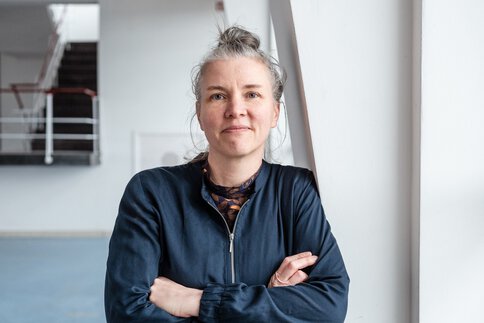
Ms. Fischer, you accompanied the IBA Thuringia for ten years and now head the Baukultur Foundation Thuringia. Why was it important not to simply draw a line once the IBA ended?
Katja Fischer: The IBA was a temporary exceptional state—or, as we call it, a window of opportunity. Such a process concentrates a huge amount of energy. It is both a driver and a catalyst, but also exhausting for everyone involved. After ten years, you have to bring something like this to an end, otherwise the idea wears out. At the same time, networks have grown, trust has emerged, shared learning has taken place. If you were to cut that off, the most valuable resource would be lost. That’s why it was wise of the State of Thuringia to use an independent structure to continue this relationship-building work. At the Foundation, we call this our “IBA legacy.” This doesn’t just mean 40 model projects, but above all an attitude: Change succeeds only when politics, administration, planners, and civil society pull in the same direction. And that is exactly what we need today—in the midst of multiple crises.
What do you mean by the IBA legacy?
Katja Fischer: First, it includes the projects that emerged—community health kiosks, places of arrival, modern timber buildings, or “climate-cultural landscapes.” They are lighthouses, but more importantly, evidence that transformation in rural areas is possible. It is important for us to keep these examples visible and to honor the people who worked on them for years. At the same time, the IBA legacy is a mandate: maintain networks, serve as a point of contact, spark debates. As a foundation, we are the “pinball” in the ongoing game of transformation—we nudge, connect, and reflect back. This independent role is crucial because it builds trust.
Why is vacancy such a central issue for building culture in Thuringia?
Katja Fischer: Because it reveals what is happening in society. In East Germany, nearly an entire generation is missing—the outmigration of the 1990s left deep marks. What remains are empty homes, schools, stations, and churches. Vacancy is the echo of this transformation. For us, however, it is not just a deficit but a resource. That’s why we coined the term “LeerGut” (a play on “empty goods” and “valuable emptiness”). It shifts the perspective: not every building can be saved, but many are valuable—for local identity, for collective memory, for the community. And they contain embodied energy that we must use for the building transition.
How does vacancy become “LeerGut”?
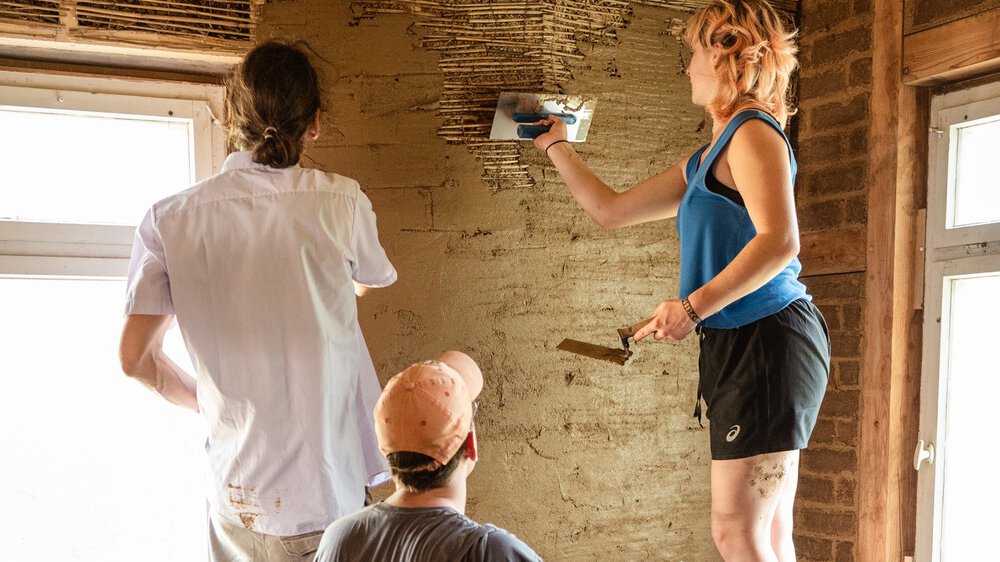
Katja Fischer: First, it requires appreciation, courage, and participation. Many administrations see vacancy only as cost and image damage. But when an empty cultural center is demolished, more disappears than a building—it tears a hole in the community. These places shape identity, and losing them weakens social cohesion. That’s why we say: get together and start an ideas workshop! Ask yourselves what this place once was, what it could become, what it means to you. And allow room for experimentation. People on the ground are willing to take responsibility—they need encouragement, structures, and sometimes just a small starting impulse.
You speak of the democratic aspect of vacancy…
Katja Fischer: Yes, because it’s not just about bricks and mortar. In Thuringia, most municipalities have only a few thousand residents. When the cultural center or the train station closes, you lose more than infrastructure. You lose places where people meet, discuss, argue, celebrate. These are everyday spaces of democracy. Vacancy is therefore also a democratic problem. When we activate “LeerGut,” it’s not only about renovation but about community spirit, participation, and the right to shape your own environment.
How did the idea of microfunding come about?
Katja Fischer: Directly from the IBA. We saw that often a small impulse is enough to set engagement in motion. That’s why, in the final year of the IBA, we recommended to the state parliament: “fund quickly.” Today we call this format microfunding. The idea is simple: small sums, low bureaucracy, no endless applications. A thousand euros won’t renovate a house, but they can support an idea, bring partners together, make a project visible. It’s about the initial spark—and that phase is often decisive.
Why is this type of funding so important?
Katja Fischer: Because classical funding programs are hardly manageable for small structures—they simply run into the void. They are too cumbersome, too complex, or start too high. Thuringia has 605 municipalities—most of them small, with limited administrative resources. Many ideas emerge in places without much specialized staff or major funding sources. The microfunding call highlights this diversity. We often strengthen small initiatives—and make them visible, also as encouragement for others. At the same time, we identify trends: when similar topics appear in many places, we can feed this knowledge back into politics. That is the real opportunity: small amounts with big leverage.
What do you wish for the coming years?
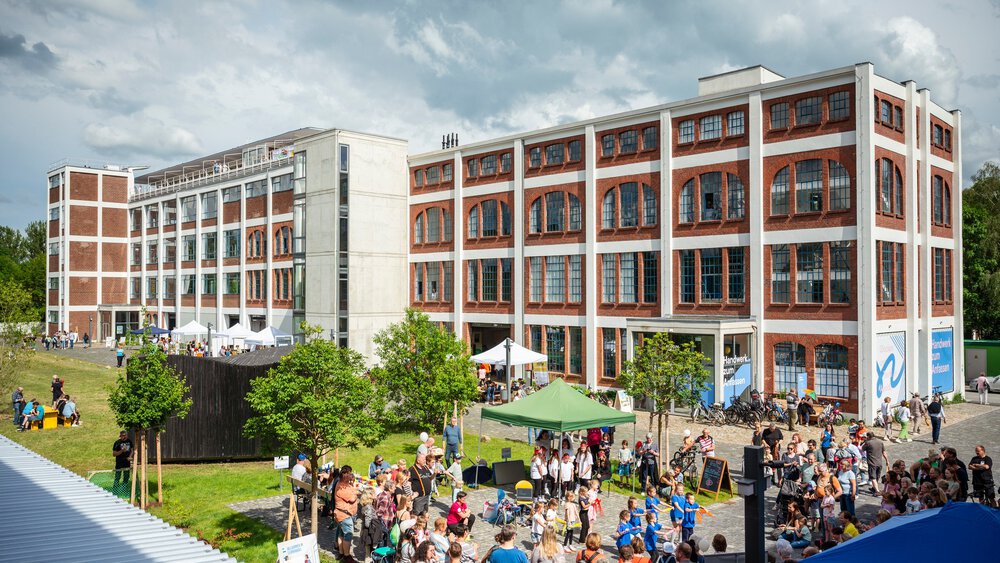
Katja Fischer: My view is clear: building culture is not a luxury. It is the foundation for good living environments—where people get involved, where democracy remains alive, where we work with available resources and create beautiful places. If we manage to maintain a shared language and trust among all actors, we are on a good path. This requires bridges—between administration and civil society, politics and local people. I hope we take our existing building stock and “LeerGut” seriously as resources, that we can stabilize the microfunding program, and that we continue shaping a new narrative for rural areas. Ultimately, it’s about being present and encouraging: showing that and how change is possible. Places like the Eiermann Building in Apolda stand for this—they prove: it can be done.

Vita
Katja Fischer is the Executive Director of the Baukultur Foundation Thuringia. Previously, she was long-time program and project manager of the International Building Exhibition (IBA) Thuringia from 2012 to 2023. In research and teaching, she has served as a visiting lecturer at Virginia Tech / WAAC (USA) and guest professor at the University of Kassel. She advises, among others, the German Federal Ministry for Housing, Urban Development and Building (BMWSB) and the Zukunft Bau program on issues of building culture and innovation.