

Materials and resources: From raw material to lasting value

Since Earth Overshoot Day on July 30, 2026, we have been using more resources than the Earth can regenerate. In construction as well, the question arises of how built-in materials can be used for longer and preserve their value.
The limits of recycling
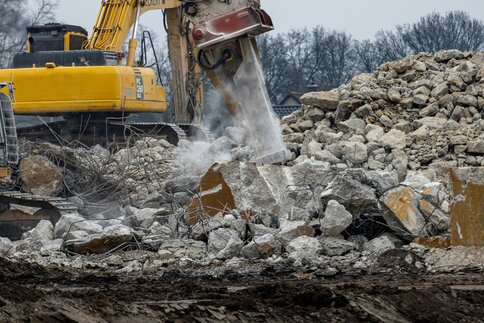
Recycling is considered one of the key approaches to reducing raw material consumption in construction. However, the study “Sustainable Transition in Building Materials” by Butterfly Effect Consulting and the Wuppertal Institute also highlights its limitations. In Germany, a very high proportion of mineral construction waste is already recovered. This does not mean, however, that it is turned back into materials of equal quality. While concrete is recycled on a large scale, only a small proportion is returned to concrete production. Most recycled mineral construction materials are used in other areas, such as road construction.
There is also a quantity problem. Secondary materials currently replace only 13 to 14 percent of primary mineral raw materials. The study does not expect sufficient quantities in the coming years to fully meet the demand for primary raw materials either. More recycling can therefore reduce the consumption of raw materials, but it cannot replace them entirely. This raises a question that comes before the recycling debate: How much new material do we actually need? Preserving existing buildings and extending their service life are just as important as material-efficient construction and the reuse of entire building components. Material that does not have to be newly extracted and processed in the first place does not need to be recycled later.
The study also highlights a second lever. Technical processes and regulations for various circular solutions already exist. Yet they do not automatically make their way into the market. Tendering procedures and procurement have a major influence on which construction materials are actually used. Public authorities, in particular, could use their purchasing power to help turn technically viable solutions into reliable markets.
From urban mine to material marketplace
The idea of the city as an urban mine is compelling. However, for reuse, it is of little help to know that millions of tonnes of material are embedded somewhere in the built environment. Anyone planning to reuse, for example, a steel beam or façade elements needs much more detailed information. Which components are available? What are their properties? What condition are they in? When can they be dismantled?
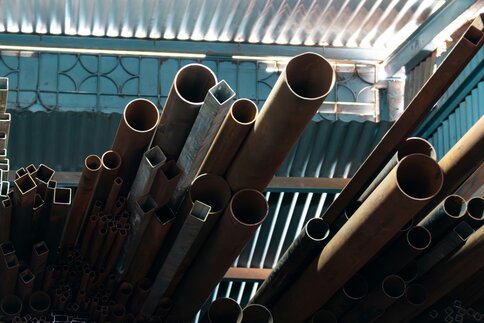
The European research project CityLoops focuses on these practical aspects of the circular economy. Material passports and pre-demolition audits provide information about existing resources. Digital marketplaces make these resources visible to other projects. Since deconstruction and new demand rarely occur at the same time, material banks can also provide temporary storage. This turns an existing stock of materials into something that can actually be planned with. This is particularly important for reuse. Wherever possible, a component remains a component – unlike recycling, where the material is processed and becomes the raw material for a new product. CityLoops follows the waste hierarchy, in which reuse takes precedence over recycling. The key question, therefore, is not only which materials are embedded in our buildings, but also whether they can be identified and made available in time for their next construction project.
Material as a future asset
What if the value of a building material became relevant even before a building was dismantled? The research project “Material Recovery Right” (MRR) by RWTH Aachen University explores how the expected residual value of recoverable materials could already be factored into a building’s financing. Through a tradable certificate, the right to recover materials at a later stage is separated from ownership of the building. The developer receives capital during the construction phase by selling the certificate, while the buyer acquires the right to the future material value – or to the material itself.
The model was tested, among other applications, on the façade of the Hamburg-based “Moringa” project. The results highlight an important distinction: what works well environmentally within a circular system is not necessarily economically attractive. In the reuse scenario, the Circularity Score of the façade under investigation improves by more than 60 percent. The calculated current residual value, however, varies significantly: for the façade bricks, it amounts to two percent of the original investment, compared with seven percent for the aluminium substructure. The higher material value of aluminium makes a significant difference here.
MRR thus establishes a link between material selection, design for deconstruction and financing. If future material values are taken into account at the construction stage, they could help finance part of today’s investment in circular construction. However, this does not work for every material: where residual value is low or recovery is costly, the researchers conclude that the market mechanism alone is not sufficient.