

The Climate-Resilient City

Heatwaves have long been changing not only the climate but also everyday life in cities. Public spaces overheat, people avoid walking routes, and the quality of life in city centres declines. New studies show that climate resilience is not merely a technical challenge; it is increasingly becoming a matter of urban design, health and social inclusion.
Urban Heat as a New Permanent Condition
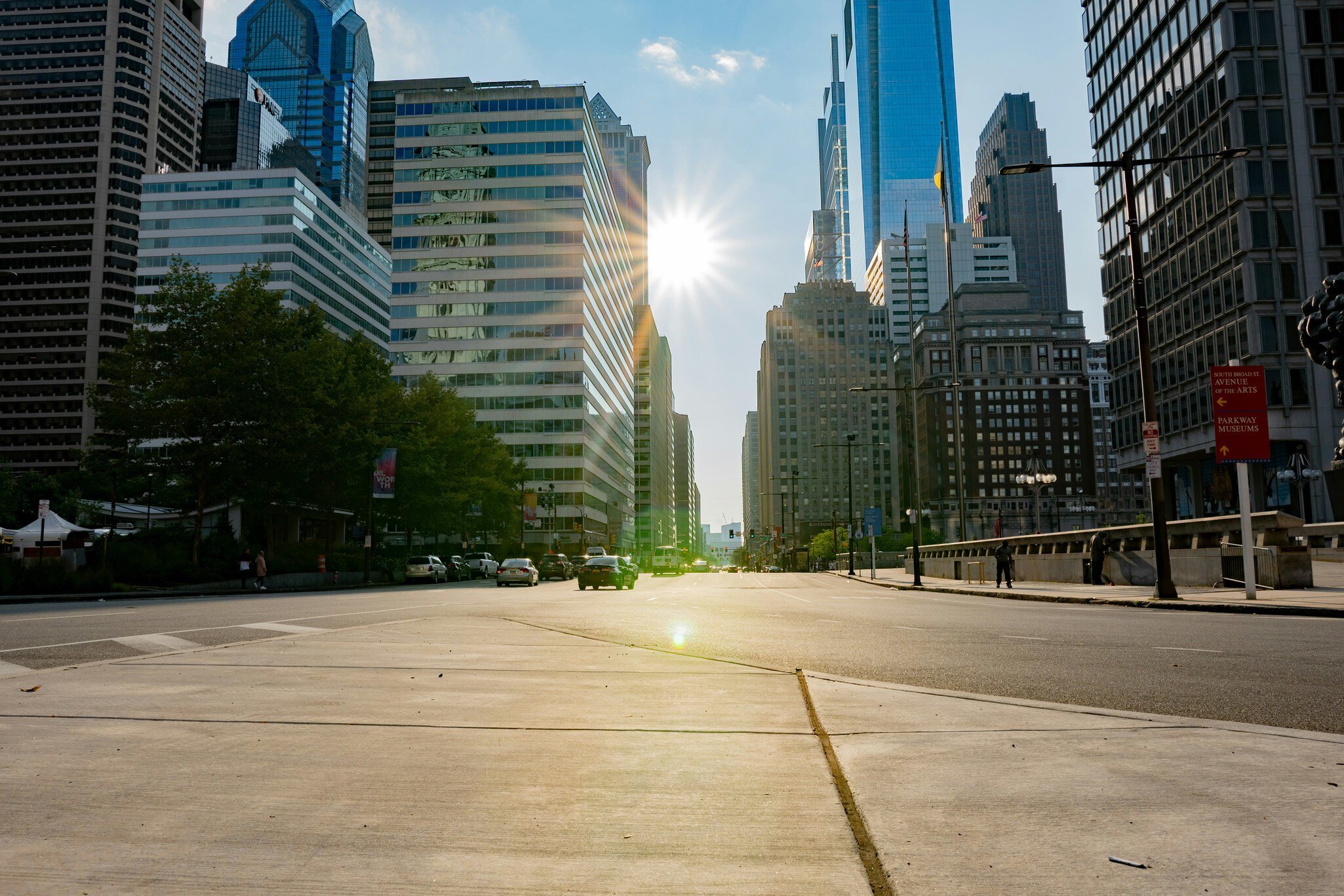
For a long time, heat in Germany was considered an exceptional event. Today, however, it is increasingly becoming a permanent feature of urban summers. Particularly densely built-up and heavily sealed urban districts store heat for hours and release it only slowly at night. This so-called urban heat island effect causes cities to record significantly higher temperatures than their surrounding areas—with noticeable impacts on health and daily life. A recent study by the Federal Institute for Research on Building, Urban Affairs and Spatial Development (BBSR) shows how strongly the built environment influences the perception of heat. Not only air temperatures matter, but also building density, materiality, lack of ventilation, and the quality of public spaces. In Berlin alone, the study estimates that around 100 people die each year due to extreme heat. Those most affected are older adults, children, people with pre-existing conditions, and individuals without adequate places of retreat. At the same time, the research makes clear that heat is far more than a meteorological issue. It changes behavior in urban space. Routes are avoided, places to stay lose attractiveness, and squares and transit stops become areas of strain. Especially where shade, greenery, or water are missing, a new form of urban stress emerges.
This also shifts how urban planning is viewed. For decades, the focus was on densification, mobility, and land-use efficiency. The question of how a city actually feels during prolonged heat played only a minor role. Increasingly, however, it is becoming clear: cities must not only function in the future, but also remain livable under climatic extremes.
Climate Resilience Becomes a Design Task
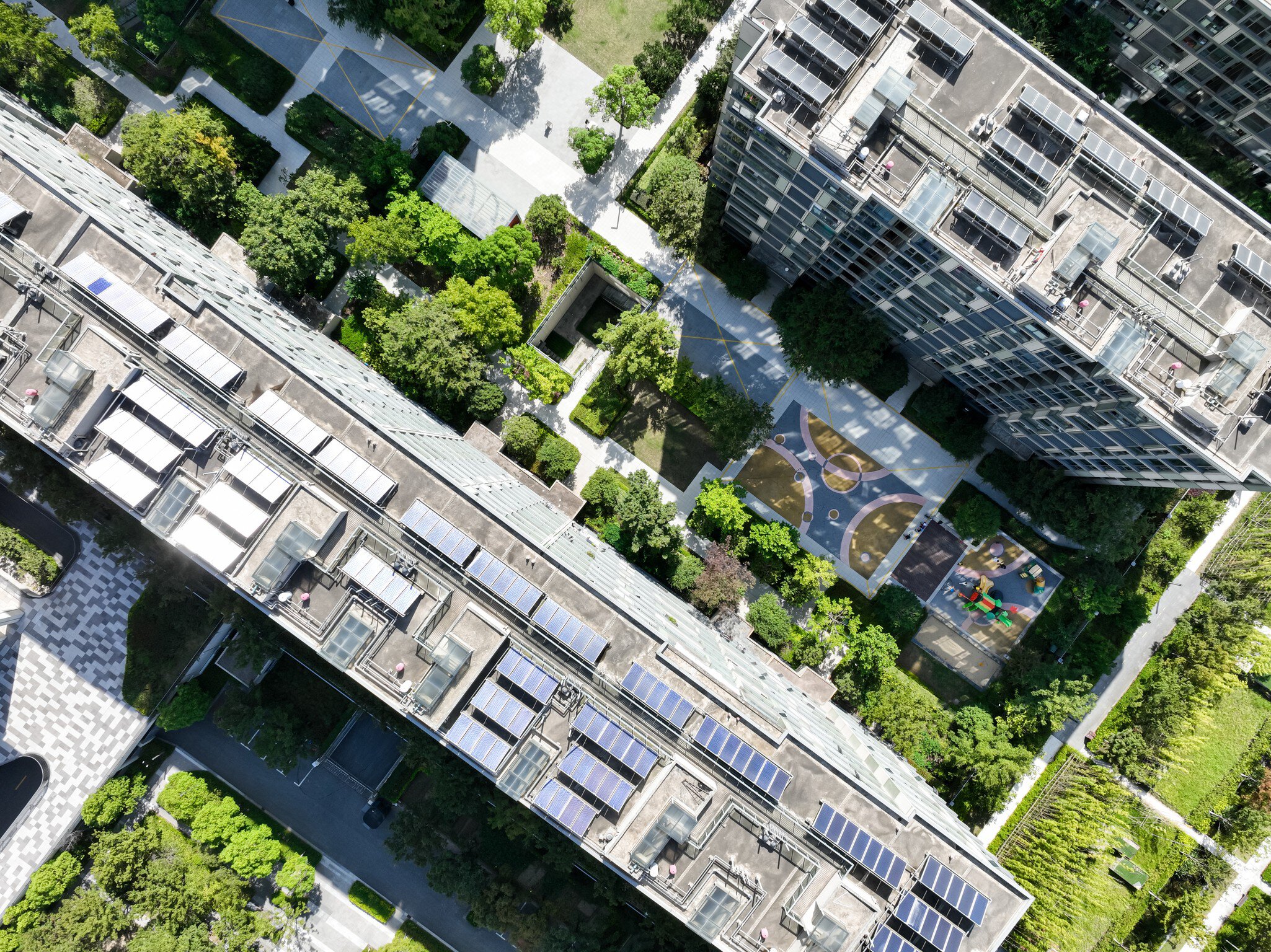
Recent research findings show that technical measures alone are not sufficient. While shading, urban greening, de-sealing, and water features remain key tools of climate adaptation, studies increasingly point to another decisive factor: the subjective perception of urban spaces. In the research project “Heat in the City,” this relationship was examined through so-called “Climate Walks,” where guided urban walks through areas with varying heat exposure were conducted. Temperature data and personal perceptions were recorded simultaneously. Participants described where they felt exposed or protected, and how shade, traffic, or spatial comfort influenced their experience. The results show that heat is perceived as more intense when additional stressors such as traffic noise, poor air quality, or visual clutter are present. As a result, spatial comfort itself becomes an integral part of climate-resilient planning. This fundamentally changes the requirements for architecture and urban design.
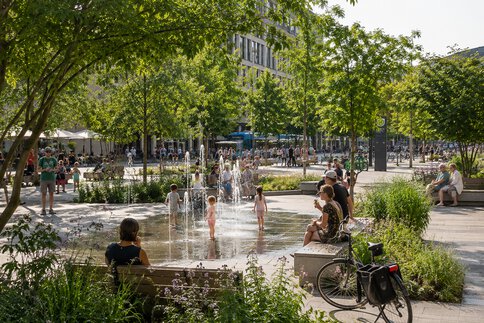
The focus is shifting not only toward parks and green spaces, but also toward everyday transit spaces such as bus stops, squares, sidewalks, and train platforms. These are places where people often stay involuntarily and without protection. The research therefore recommends increasing shading in waiting areas and improving spatial comfort in a targeted way. In addition, public spaces should be planned more differently according to use and exposure. A particularly interesting concept is that of “cool routes.” These are not just isolated cool spots within the city, but continuous, shaded, and green corridors connecting key everyday destinations. In daily life, it is not enough to provide individual refuges if the routes leading to them remain stressful.
This establishes a new standard for urban quality. A climate-adapted city is no longer defined only by energy efficiency or land use, but also by thermal comfort in public space. Questions of microclimate are thus moving to the center of urban development.
Between Public Health and Resilient Urban Development
At the same time, the concept of climate resilience is gaining increasing importance beyond traditional urban planning. In the guidance document “Stress Test for Cities”, heat is no longer seen only as an environmental issue, but also as a risk to the overall functioning of municipalities. This affects healthcare systems, energy infrastructure, water supply, mobility, social stability, and public spaces alike. Using the digital tool “Stress Test for Cities,” the Federal Institute for Research on Building, Urban Affairs and Spatial Development (BBSR) aims to make these vulnerabilities more systematically assessable. Municipalities can use it to analyze different crisis scenarios—from heatwaves and heavy rainfall to energy or supply crises—and derive strategic measures from them.
The tool examines various areas of urban functionality, such as environment, health, housing, energy supply, mobility, and social infrastructure. Notably, resilience is not defined purely in technical terms. Social cohesion, neighbourhoods, and trust are also considered key factors in how resilient cities are in the face of crises. Extreme heat not only affects health and public spaces but also places strain on energy systems, water networks, and social infrastructure. At the same time, existing inequalities are exacerbated, as not all people have equal access to protected or cooled spaces. Drinking water points, shaded areas, and green open spaces are therefore increasingly becoming part of urban basic services.
It also becomes clear that many cities still originate from a time when sealed plazas and overheated street spaces were rarely questioned. The key challenge, therefore, lies less in isolated heat-response measures than in a more fundamental question: how must cities be planned, redesigned, and managed so that they remain livable public spaces under persistently changing climatic conditions?
Sources:
Schroth, J.; Draeger, S.; Gabriel, J.; Santucci, D., 2025: Heat in the City: A socio-spatial differentiated analysis for climate adaptation measures from the perspective of urban users in Berlin. Cottbus. Download
von Richthofen, A.; Wawerek, J.; Guadalupe Aranda Sánchez, M.; Kissick, H.; Lutherborrow, T.; Vasilenko, E.; Imorde, J.; Sandscheiper, F.; Syska, M.; Bücker, N., 2026: Stress Test for Cities. Guidance on digital resilience monitoring for cities and municipalities in Germany. Published by the Federal Institute for Research on Building, Urban Affairs and Spatial Development (BBSR). Bonn.