Building On Instead of Rebuilding: DAM Prize 2026 Goes to ZK/U Berlin

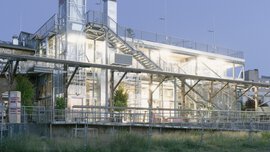
A former freight depot hall, an ephemeral steel-and-glass envelope, and construction costs of only around 2,000 euros per square meter: the ZK/U Center for Art and Urbanistics in Berlin-Moabit, designed by Peter Grundmann Architekten, wins the DAM Prize 2026.
Housing, social, and educational buildings dominate
For the tenth time, the German Architecture Museum (DAM) awarded the prize in cooperation with JUNG. As it does not require a specific building typology, minimum size, or construction budget—and is based on extensive research with a regional advisory board—the annual shortlist does not represent a curated ideal, but rather what has actually been built and deemed noteworthy. Each year thus becomes a document of its time.The 2026 edition speaks clearly: no representational buildings, no new museum landmarks, no corporate architecture. Instead, subsidized housing, a homeless shelter, cooperative housing, a school, and a cultural center in a converted industrial hall. There is also a noticeable concentration of timber and timber-hybrid constructions, as well as projects that work with existing structures or integrate them. Architecture that engages with resources, adaptability, and social impact.
From a longlist of around 100 buildings—completed between late 2023 and spring 2025—an expert jury chaired by Leipzig-based architect Aline Hielscher selected five projects for the shortlist, which were subsequently visited on site.
Shortlist: Innovative Housing and Social Projects
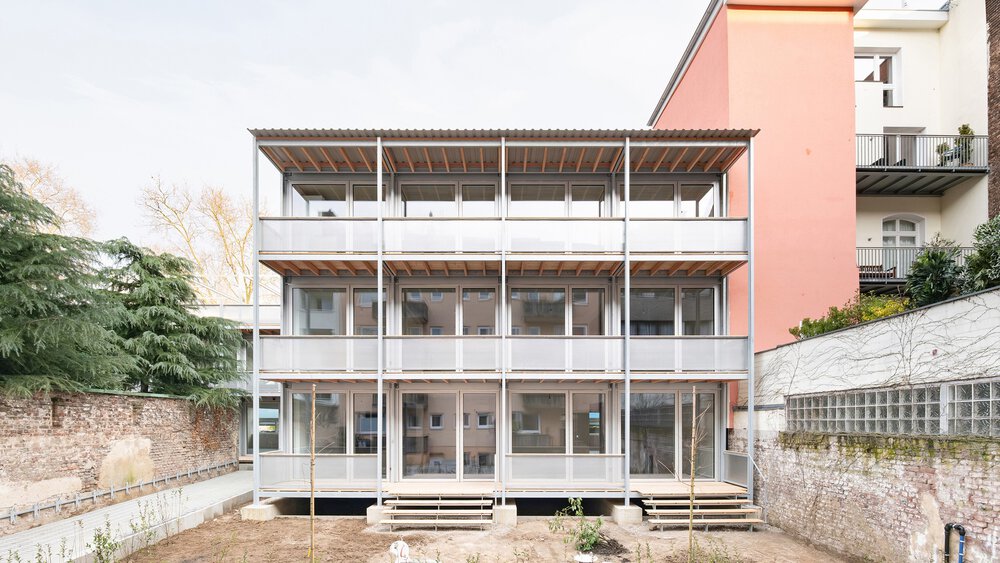
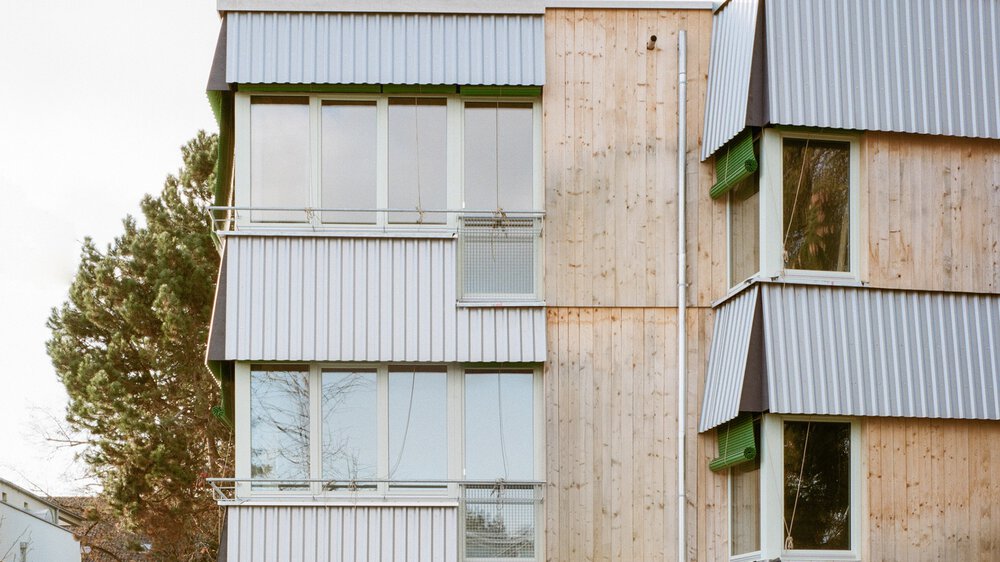
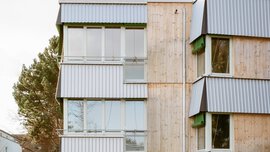
Aretz Dürr Architektur realized “Wohnen F//9” in Cologne as a modular infill project within an inner-city gap site: 32 prefabricated cross-laminated timber modules were stacked by crane within ten days, with the stairwell and elevator shaft pre-installed. In Munich, the office etal. completed the Görzer Straße 128 multi-generational housing project, a new building developed within the framework of the Mietshäuser Syndikat. The timber structure, clad in locally sourced spruce boarding, organizes seven nearly equal-sized rooms per floor around a sanitary core; planned wall openings allow for flexible living arrangements.
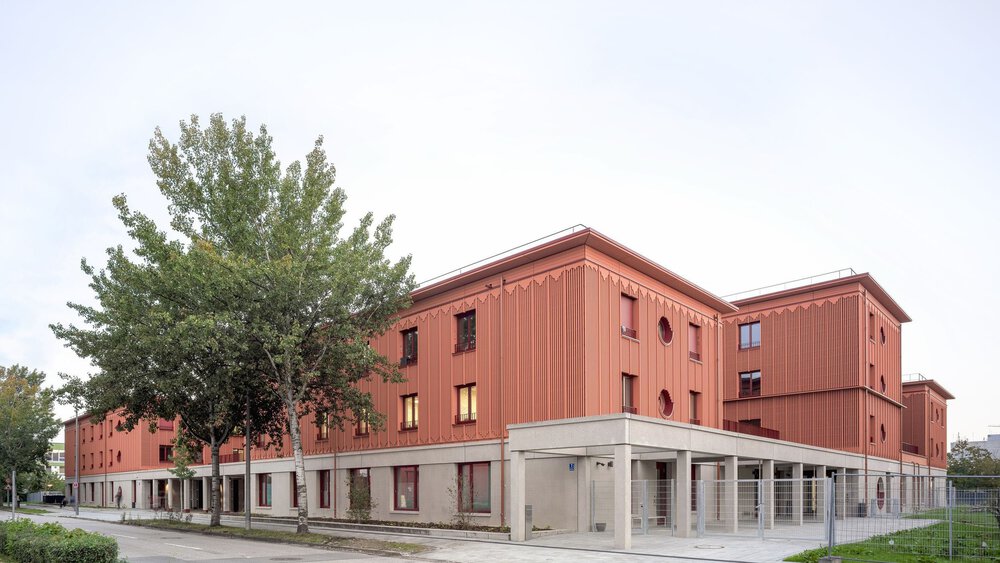
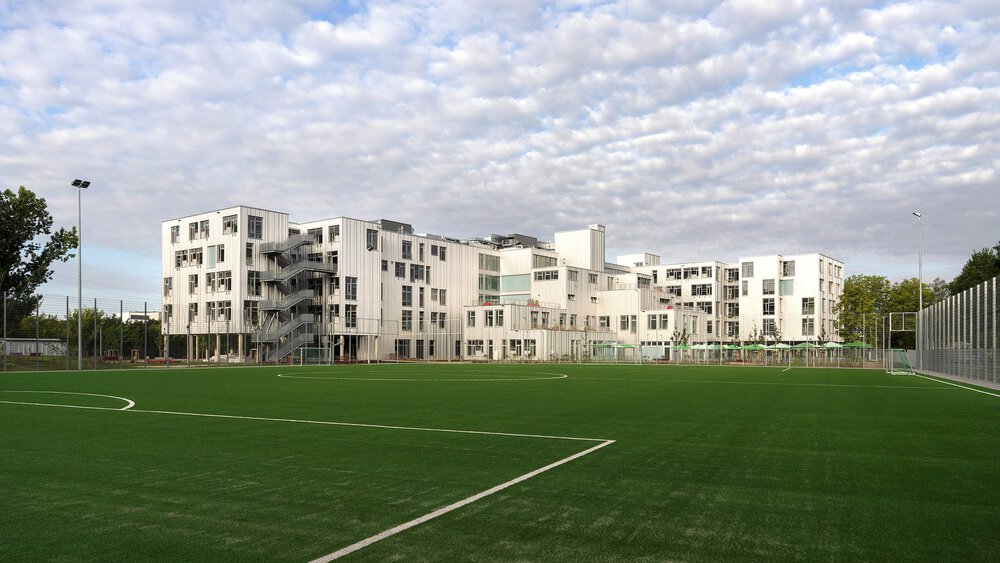
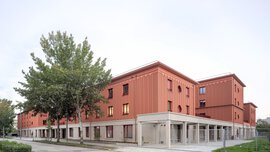
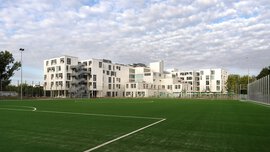
Also in Munich, Hild und K Architekten designed an overnight shelter with medical facilities for 730 people: a concrete skeleton structure combined with prefabricated timber-frame elements, a finger-like building typology arranged around a central distribution courtyard, and green photovoltaic roofs. PPAG Architects realized the Allee der Kosmonauten double school in Berlin-Marzahn as a five-story solid construction building for 1,600 students. The timber-frame façade is clad in profiled aluminum; a compartment concept organizes the structure into spatial clusters for up to 100 learners each, while two vertically stacked triple gymnasiums form the architectural core.
The Winner: Building Extension of the ZK/U in Berlin-Moabit
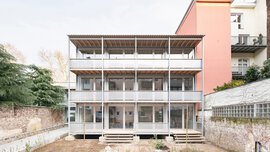
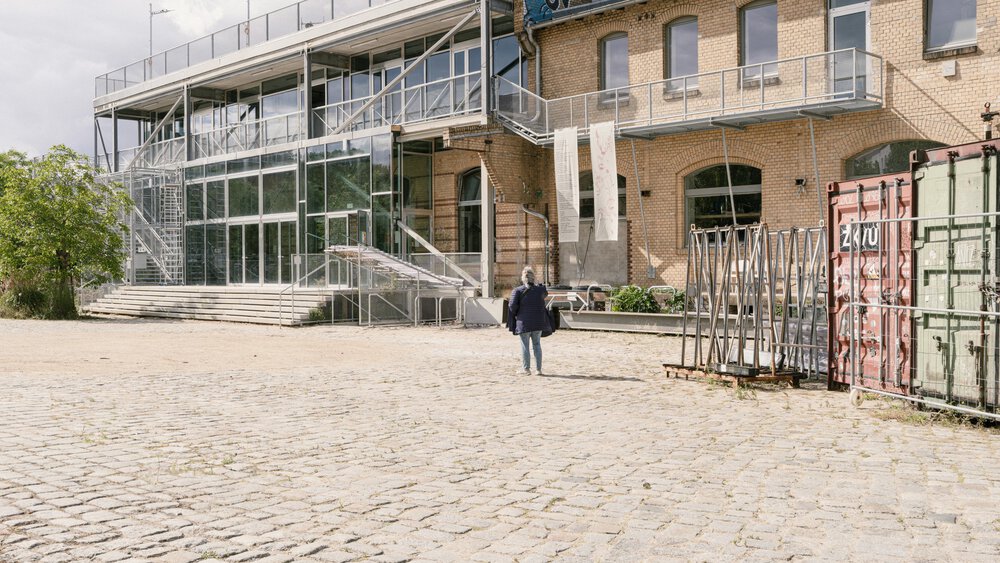
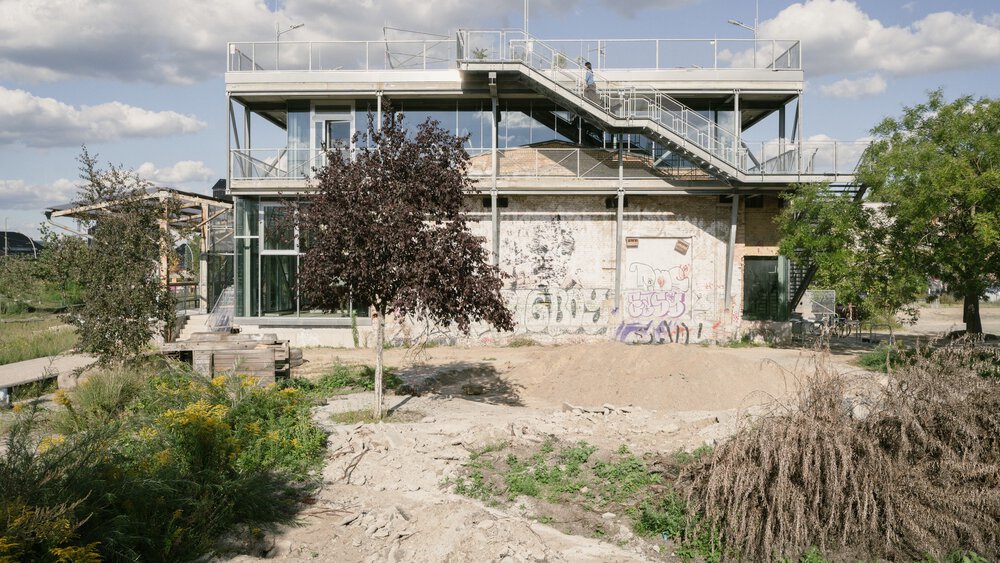
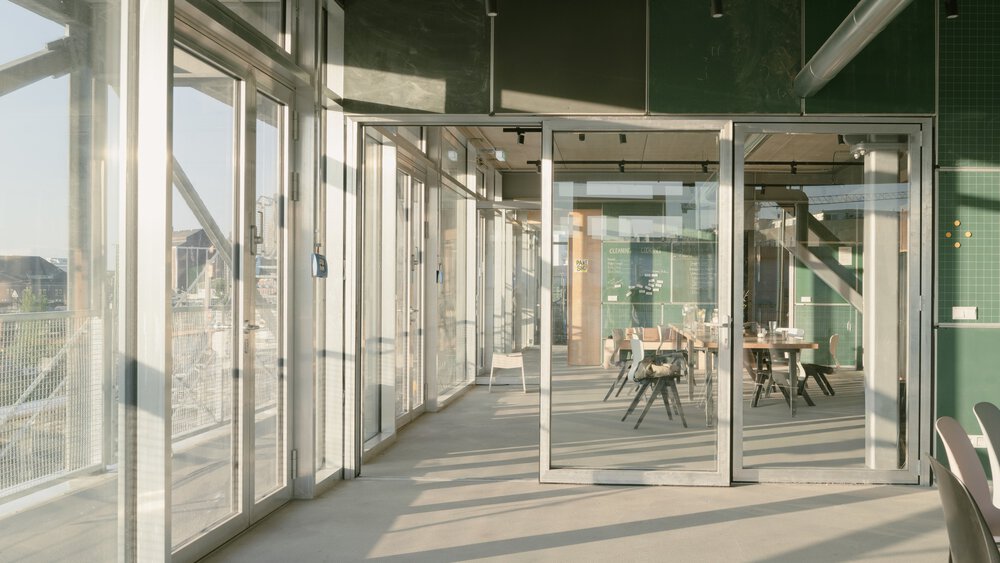
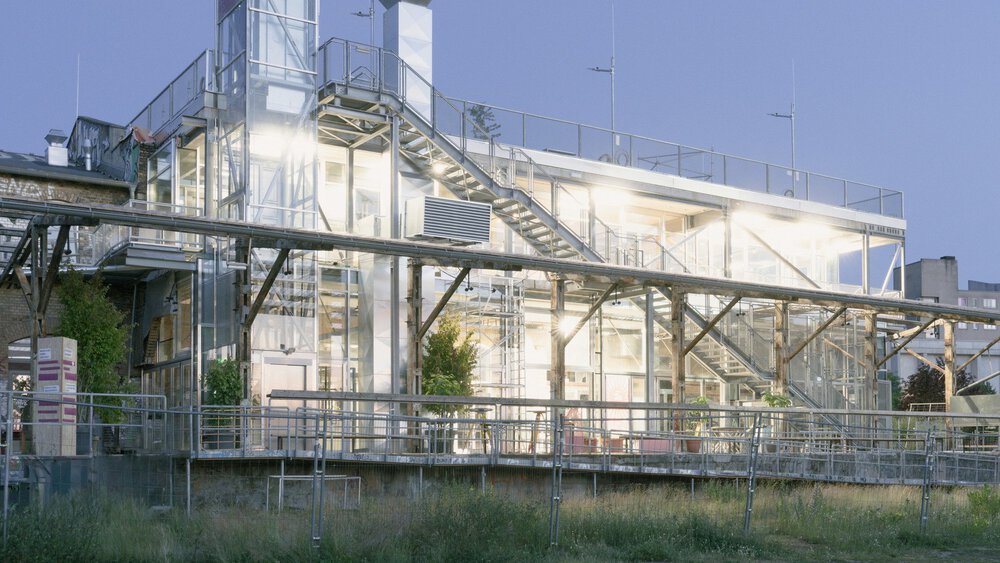
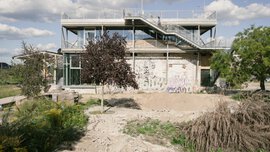
The DAM Prize 2026 is awarded to Peter Grundmann Architekten for the ZK/U—Center for Art and Urbanistics in Berlin-Moabit, a building extension project in the western part of Berlin. The project builds on the use of a former freight depot hall by the association KUNSTrePUBLIK e.V., which has been in place since 2012.
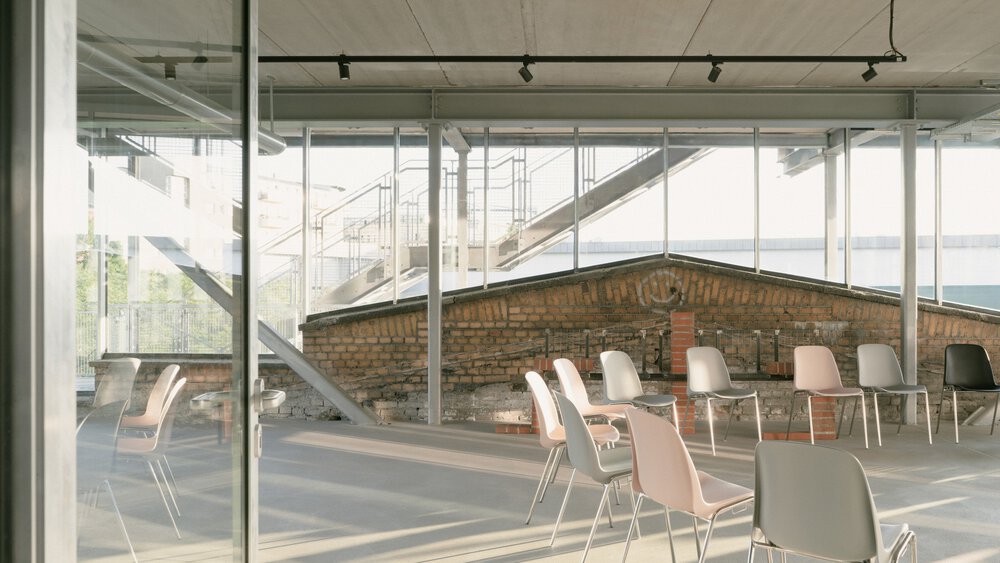
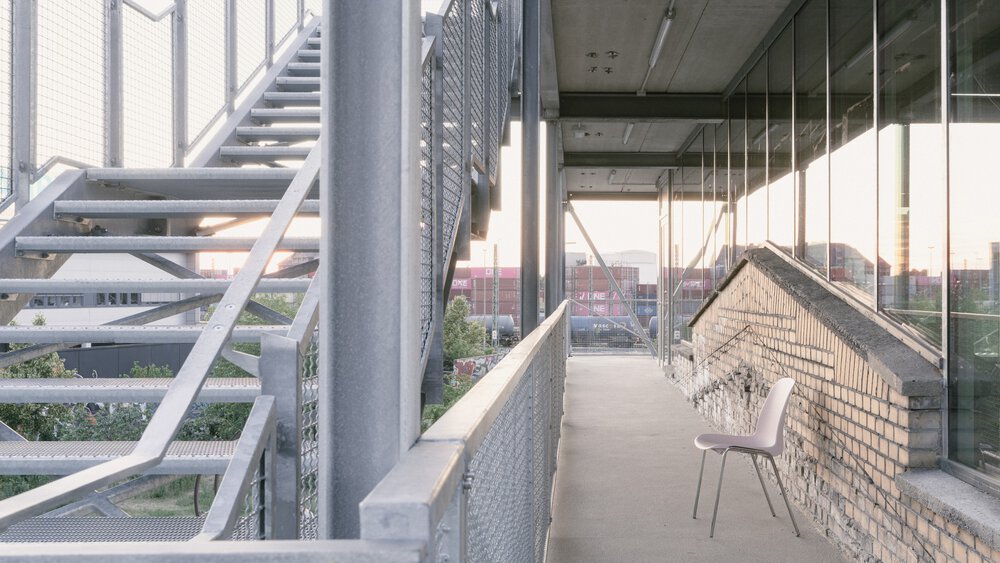
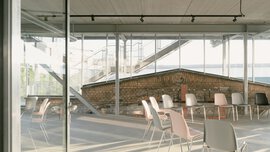
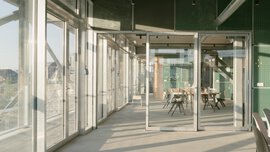
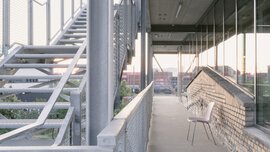
The design concept largely preserves the single-story hall and adds a second, ephemeral spatial layer of glass and steel. This outer envelope provides thermal insulation and meets energy requirements without an additional insulation layer. On the entrance side, a foyer and windbreak are created, while a six-meter-deep buffer space with a bar is located toward the garden. The new upper floor rests on a prestressed slab; recessed façades provide summer sun protection and form a continuous gallery that connects all functional units. A vaulted cellar with exhibition space extends the program downward, and a rooftop terrace completes it above.
Notably, the total construction cost is around 2,000 euros per square meter. Peter Grundmann, a trained shipbuilder, fabricated parts of the complex façade connections himself to retain control over both quality and costs. Existing non-load-bearing walls were retained, while new loads are consciously supported by clearly visible added columns.
Exhibition Until May 2026
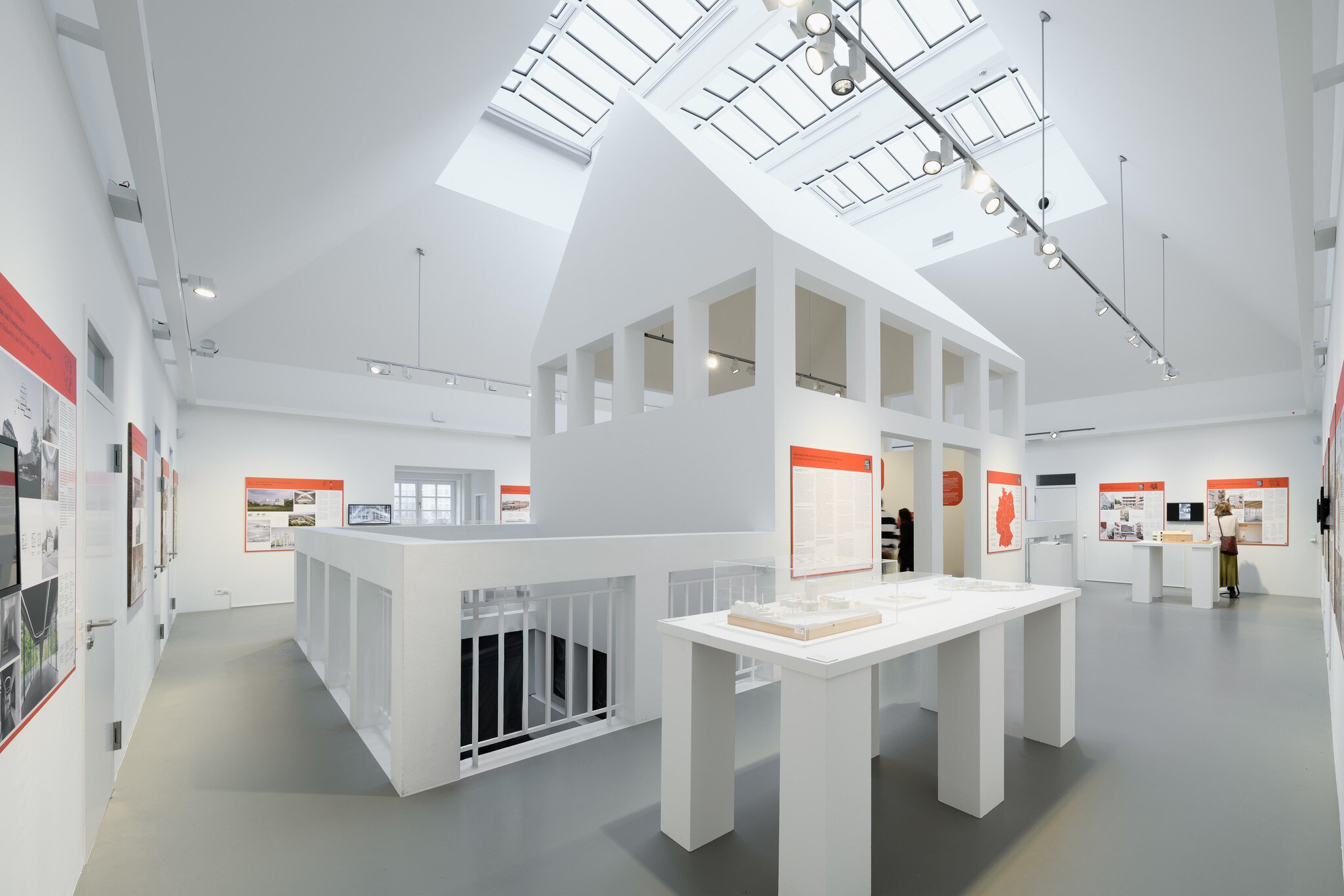
All 23 buildings on the shortlist can be viewed at the German Architecture Museum in Frankfurt am Main until May 10, 2026, supplemented by two projects abroad. The accompanying German Architecture Yearbook 2026 will be published by DOM publishers.