

Reusing construction site excavations: Earthbound shows how

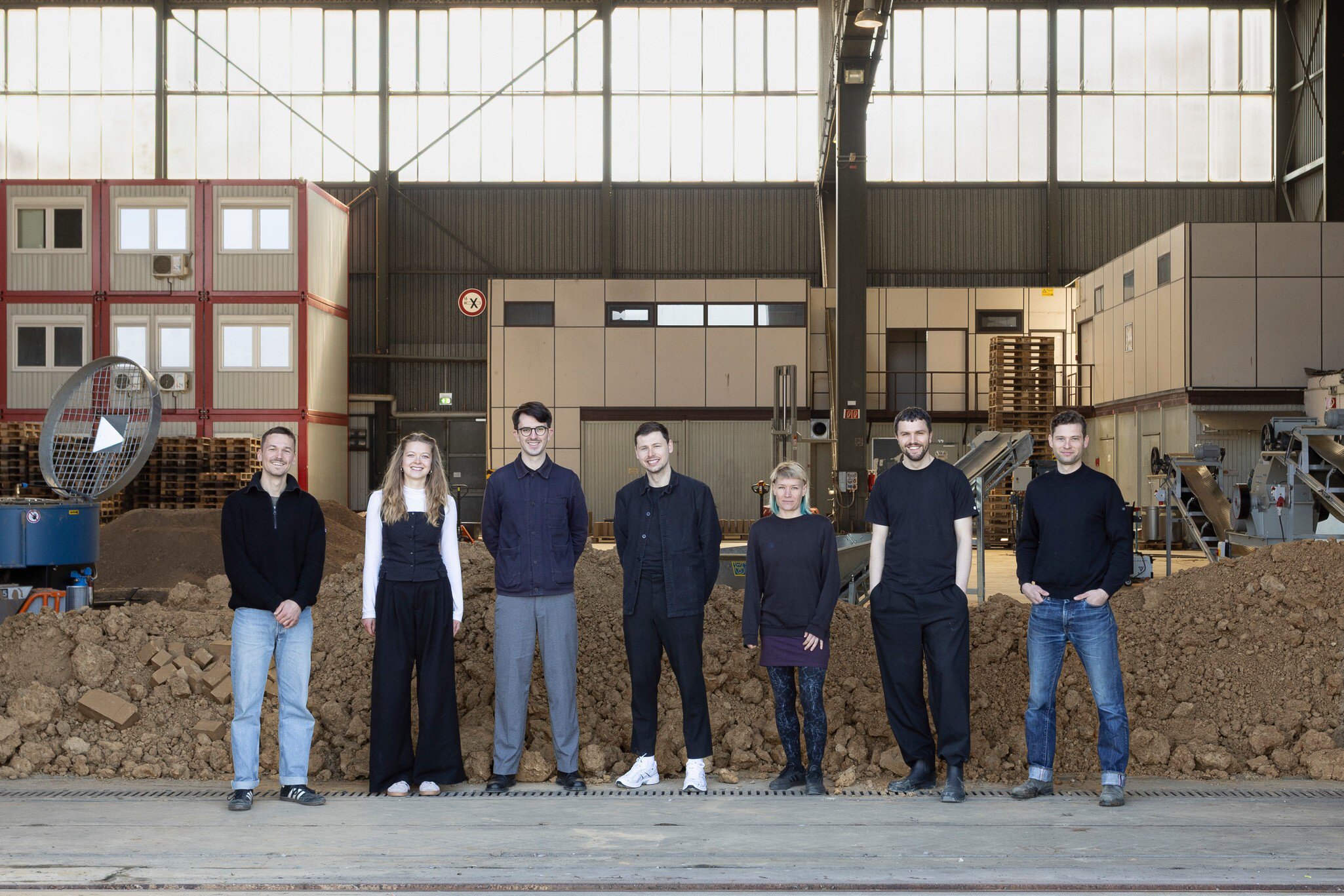
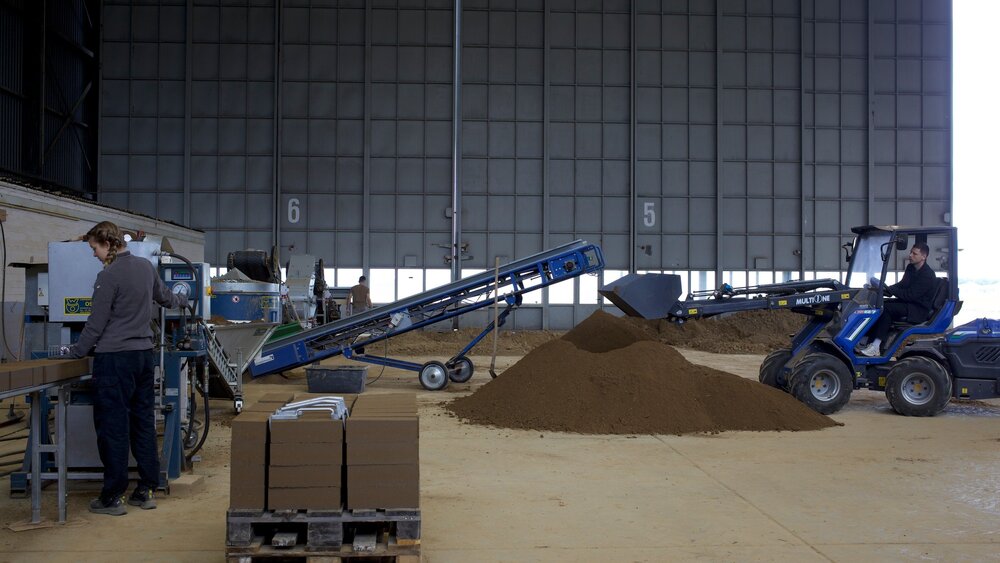
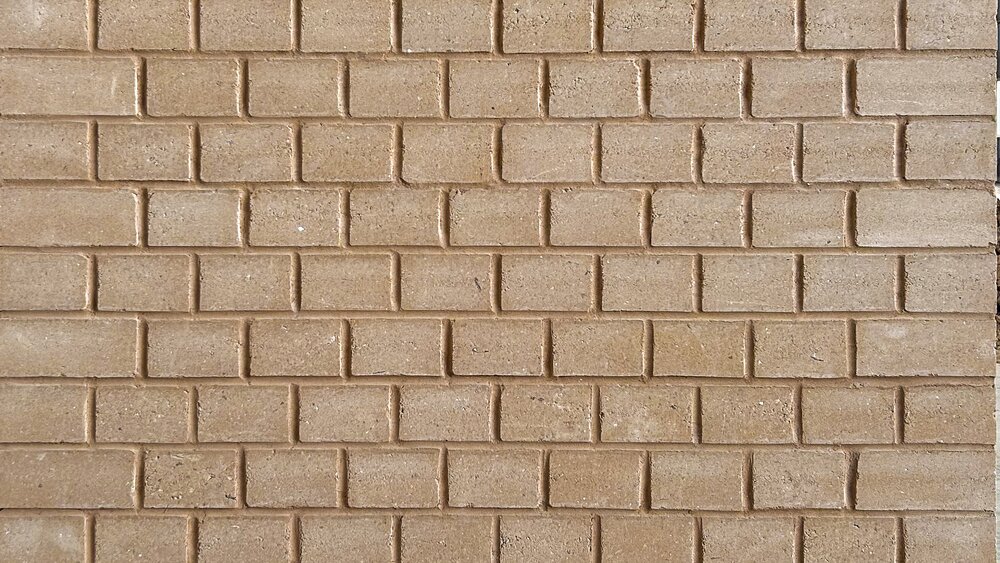
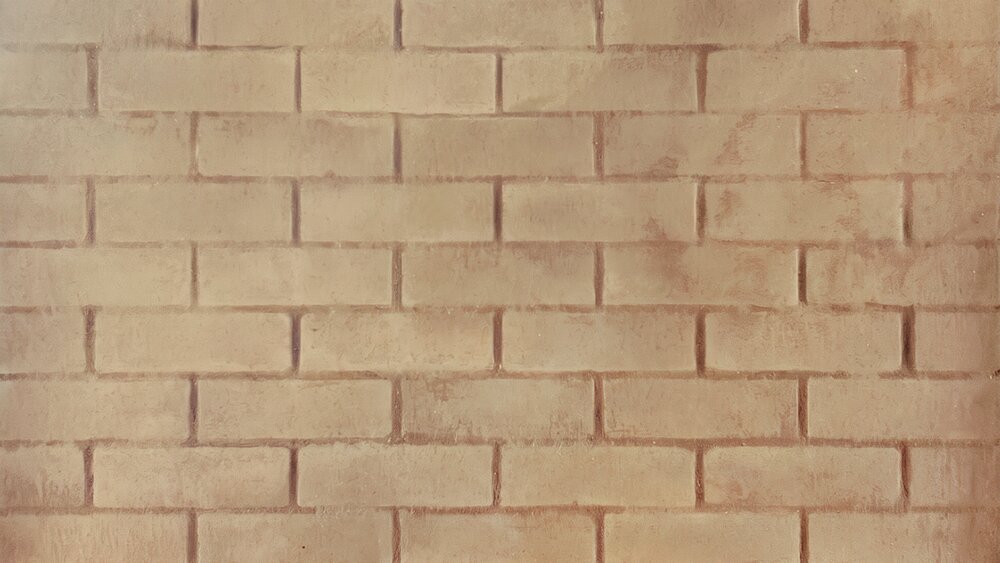
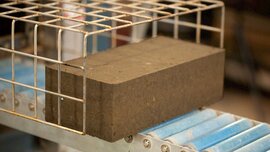
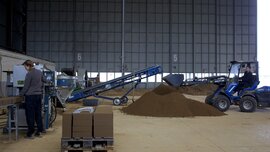
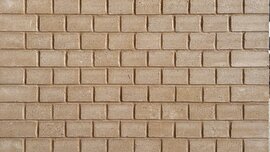
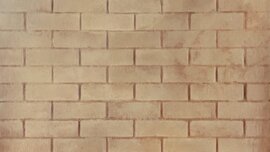
Twice a week, a 20-ton truck pulls up at the former Air Berlin hangar in Berlin-Tegel’s Urban Tech Republic. It is carrying excavated material — soil dug up elsewhere in the city that would otherwise simply be discarded. Berlin-based start-up Earthbound shows how construction site excavations can be reused: it presses them into load-bearing, unfired earth bricks for industrial production.
The city as a source of raw materials
What is new here is not the building material itself — clay has been used in construction for centuries — but its origin. Earthbound does not operate its own clay quarry; instead, it uses mineral excavated soil, which is produced on every construction site anyway. This is a form of urban mining, in which the city itself becomes a source of raw materials. According to co-founder David Janotta, the reason is simple: “Because it is a material stream that represents a very high-quality resource and remains unused — 85 percent of it is simply backfilled.” In Germany alone, around 120 million tons of excavated soil are generated each year, alongside rising disposal costs and shrinking landfill capacity. “Opening new pits is becoming more and more expensive — in terms of permits, but also with regard to biodiversity.”
Turning excavated soil into load-bearing clay bricks
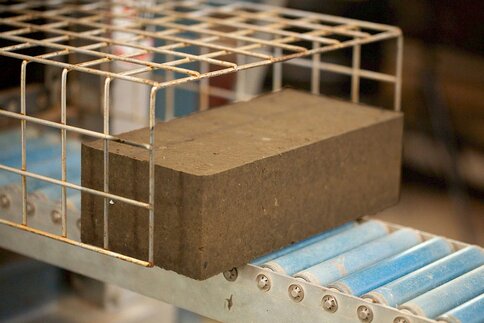
Even the sandy, low-clay subsoil of Berlin is sufficient to press load-bearing bricks. In geological terms, clay consists of clay, silt, sand, and gravel — and with its sandy ground, Berlin is often referred to as the “sand box of Europe.” Janotta says: “In principle, good clay bricks do not need that much clay to be hydraulically pressed into load-bearing bricks”. What matters instead is knowing the grain distribution of the excavated soil in detail and adjusting the recipe accordingly if needed — a principle that Earthbound has already proven in excavation-soil recycling through reference projects in Denmark, Senegal, and Boston.
Urban excavated soil is not uniform — its composition of clay, silt, sand, and gravel varies from one Berlin district to another. That is why Earthbound uses a compression molding process rather than an extrusion process: “We find the compression molding process interesting because it allows us to work with a more heterogeneous starting material and still produce load-bearing clay bricks.” The ecological effect: because the bricks remain unfired and unstabilized, they generate up to 98 percent less CO₂ than fired brick or sand-lime brick — even with a transport radius of 400 kilometers, emissions are still 85 percent lower.
Pilot-scale despite approval
The Earthbound clay brick is generally approved under building regulations: “We do not need project-specific approval. Our brick is based on DIN standard 18940, which governs load-bearing masonry.” The revised standard, introduced in 2023, now also allows multi-storey construction up to building class 4 — an important building block for the material’s industrial scalability and for the circular economy in construction more broadly. At the same time, they are working as an industry partner in the Bodendreieck research project with the Bauhaus Erde institute to further increase the compressive strength of the clay bricks, with the aim of enabling slimmer load-bearing walls in the future.
Economically, however, Earthbound is still at the beginning of its scaling journey. The facility in Tegel has been deliberately set up as a pilot production site and is semi-automated, in order to understand the process parameters before taking a larger scaling step. From around 5,000 bricks produced over four to five months of laboratory production, capacity has now increased tenfold. The current monthly output is already sufficient for a single-family home, but significantly more is needed for meaningful market penetration: in the medium term, the team is aiming for several million bricks per year, which would still represent less than one percent substitution. Seasonality also plays a role: in summer, a pressed brick dries in around one week, while in winter it can take up to four weeks. This makes pre-production and warehousing a fixed part of the planning process.
David Janotta sees Earthbound’s move into a field with established players such as sand-lime brick and fired brick as part of a larger picture: “We see ourselves more as part of the solution to a crisis that we perceive as larger.” The young material also benefits from the reference work of established pioneers in clay construction such as Martin Rauch and Roger Boltshauser. Earthbound sees itself as part of a growing market in which different players serve different regions. The company is initially positioning itself in Berlin-Brandenburg, with the option of transferring the model to other locations later on.
The next step: bold builders
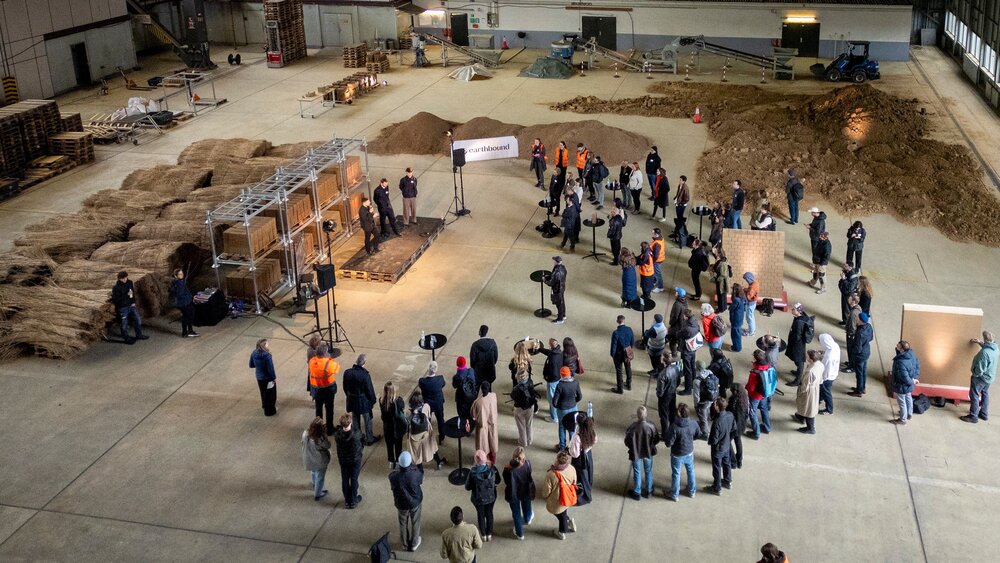
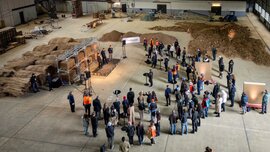
The team has set a concrete goal for the coming months: to sell the bricks remaining from the pilot production to real construction projects. A launch event has already brought together numerous architectural firms and developers who expressed interest. Yet the economic environment, particularly in residential construction, remains challenging. “Many developers follow the principle: seeing is believing,” says Janotta. That is why the first step requires individual bold-minded developers who are willing to take that first step, as with the “Klimaturm” at Berliner Hochschule für Technik, an initial visible reference project.
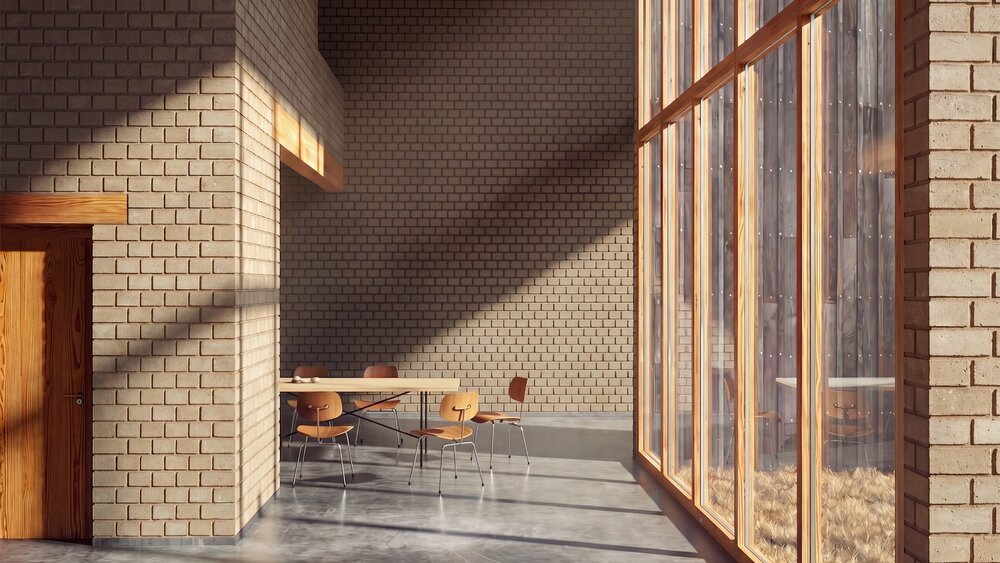
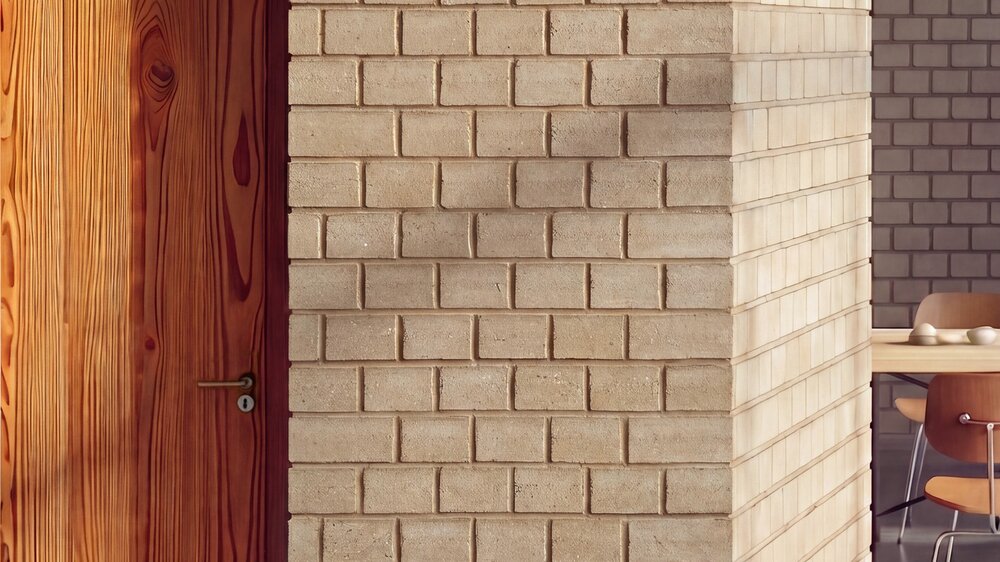
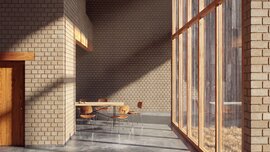
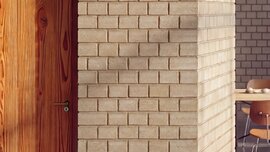
“We need people who say: Now I’m going to build a house with it,” says Janotta. He sees significant potential, particularly in interior walls: excellent sound insulation, very good fire protection, and a moisture-regulating, comfortable indoor climate for a low-temperature building without complex additional technology.
If demand continues to grow, Earthbound plans the next scaling step with around 500,000 bricks per year. Even that would still represent well below one percent of market substitution – an indication of just how much potential there actually is in the market for solid building materials. Whether this will develop into an industry will be decided in the coming years – on construction sites, not in the laboratory. According to Earthbound, however, the starting conditions have rarely been so favourable: the standards are in place, the technology has been tested, and the raw material is literally right on the doorstep.
About Earthbound
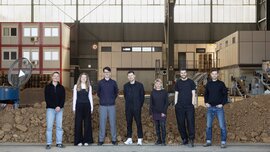
Earthbound transforms regional construction excavation material — Germany’s largest waste stream — into high-performance, healthy, and affordable building materials. At the intersection of research, design, and production, the Berlin-based startup develops regenerative materials designed to help bring sustainable construction into wider use.
FAQ
Soil that is generated during the excavation of construction pits, basements or utility trenches – usually mineral-based and often containing clay.
Because there has been no systematic market for it: legally, it is considered waste and is usually simply used as fill material in other excavations.
By qualifying the excavated material, compressing it into earth bricks and aligning the process with DIN 18940 for load-bearing masonry.
The Bodendreieck research project is led by Bauhaus Erde, in collaboration with Earthbound as its industry partner. It investigates how earth bricks with particularly high compressive strength can be optimized using locally sourced excavated material – through additives, process parameters and geometric design. The two-year project is funded through the Pro FIT programme of the Berlin Senate Department for Economic Affairs, Energy and Public Enterprises and the Investitionsbank Berlin (IBB). The project officially kicked off on 15 January 2026 at Bauhaus Erde’s research workshop.