

“Rehabilitate rather than reconstruct”—How reconstruction in Ukraine is being rethought

Interview with Prof. Dr Philipp Meuser, architect and expert in protective architecture
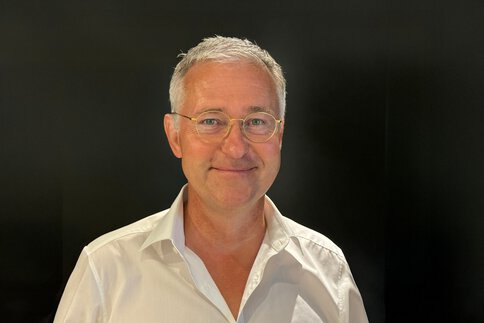
Philipp Meuser is an architect, publisher and has specialised in safety and security for many years. Thanks to his close ties to Ukraine—including an honorary professorship in Kharkiv—he became increasingly involved in urban reconstruction after the war began.
In this interview, Meuser explains how his office has grown from expertise in protective architecture into reconstruction and why the project deliberately focuses on transitional aid rather than complete renovation. Every intervention should enable subsequent energy improvements and at the same time provide insights for the huge stock of industrially manufactured residential buildings. At the same time, he describes the practical challenges: a shortage of skilled workers, high safety standards, complex ownership structures—and at the same time a remarkable initiative on the part of the residents.
It becomes clear that for Meuser, resilience is less a technical formula than an attitude. Young Ukrainian architects naturally think in terms of cycles, participation and climate-friendly construction. He sees the project as a learning laboratory for a scalable manual. His vision extends beyond Ukraine: reconstruction offers the opportunity for a modern, robust and socially sustainable building culture—a model from which other countries can also benefit.
How did expertise in protective architecture lead to a reconstruction project in Ukraine?
Philipp Meuser: Our office has specialised in safety and security for over twenty years—although until now, this has mainly involved projects with little visibility, such as those in the diplomatic context. Through this work, we have developed expertise in dealing with destruction, protection and structural resilience. Since 2018, I have also held an honorary professorship at O. M. Beketov National University in Kharkiv, which has given me close ties to Ukraine, both professionally and personally.
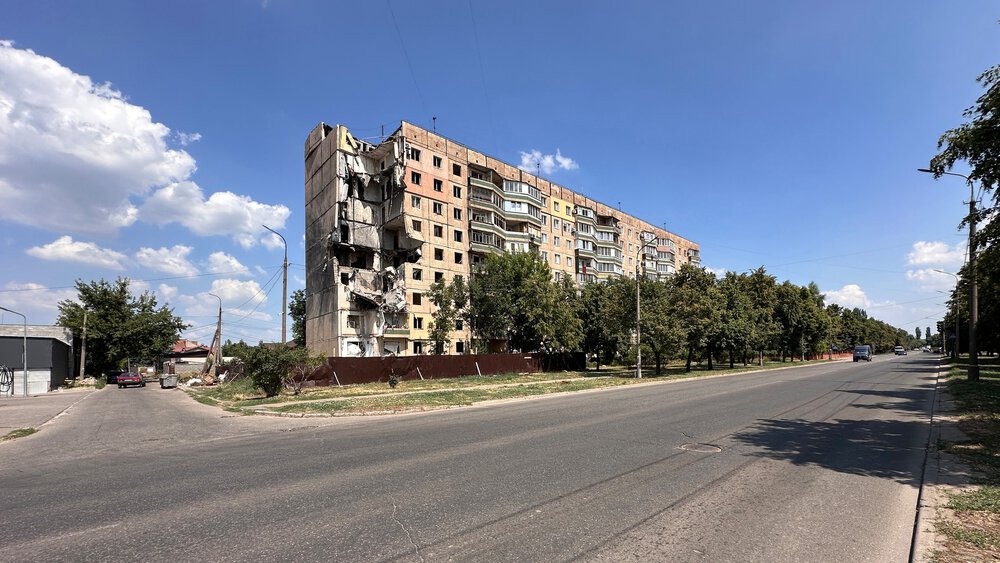
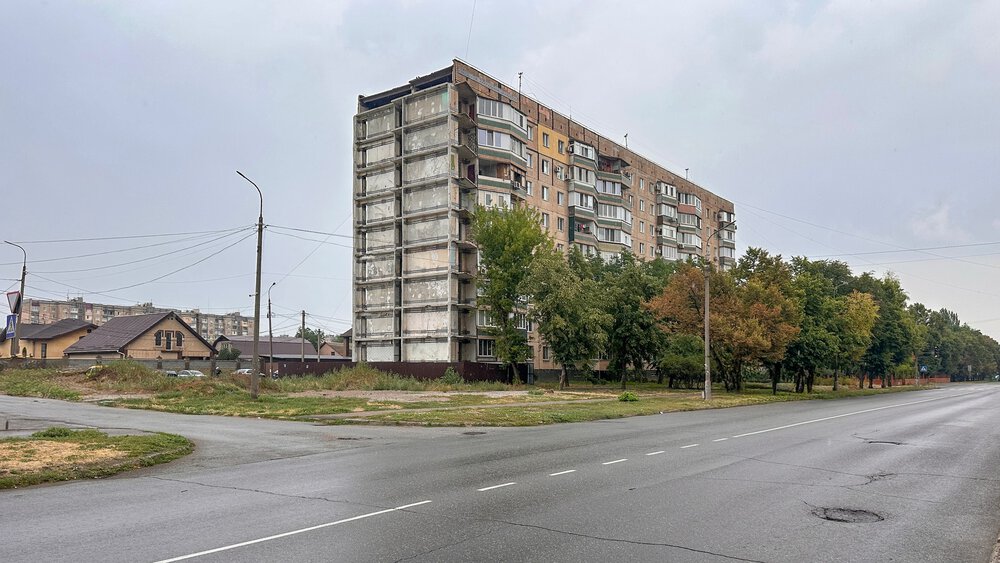
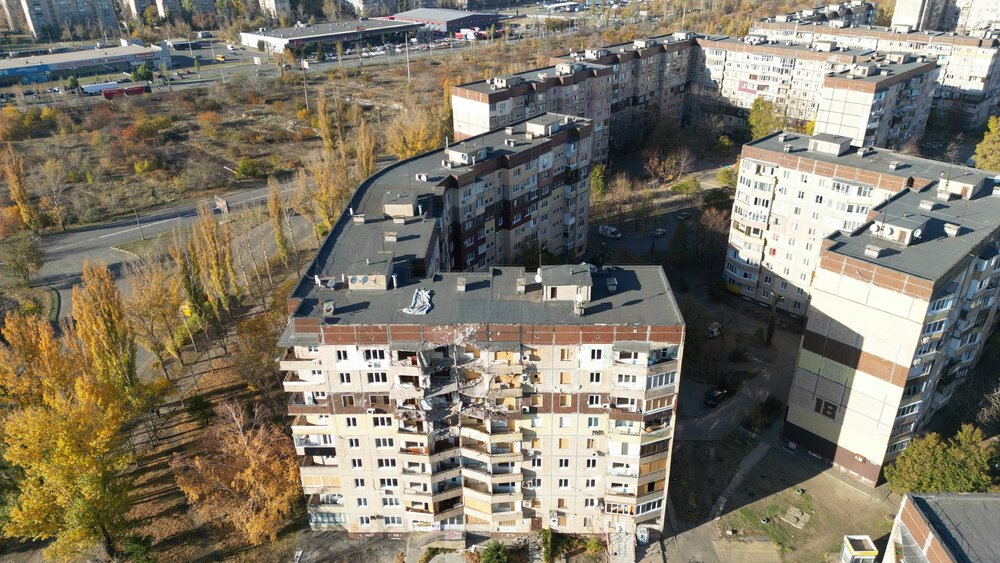
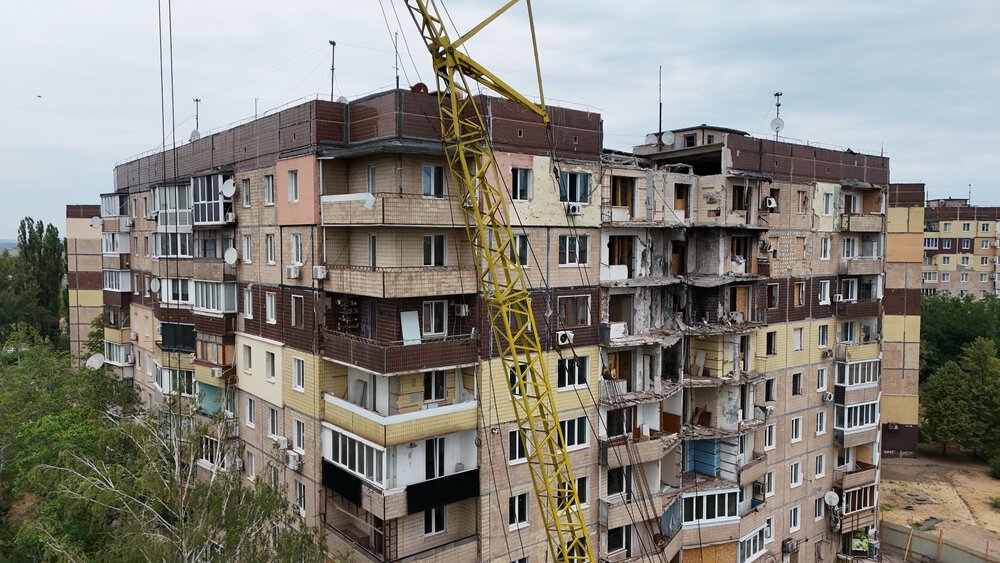
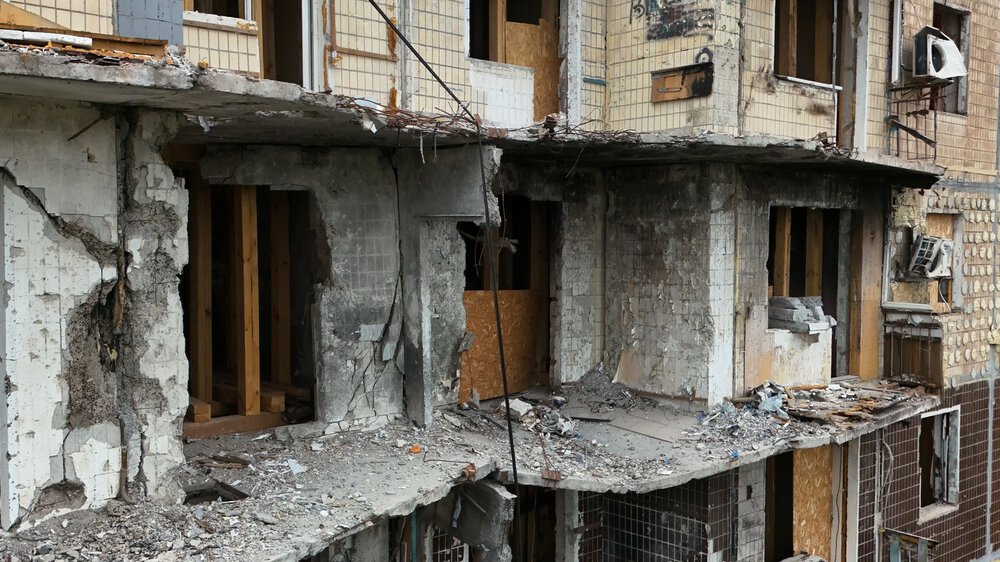
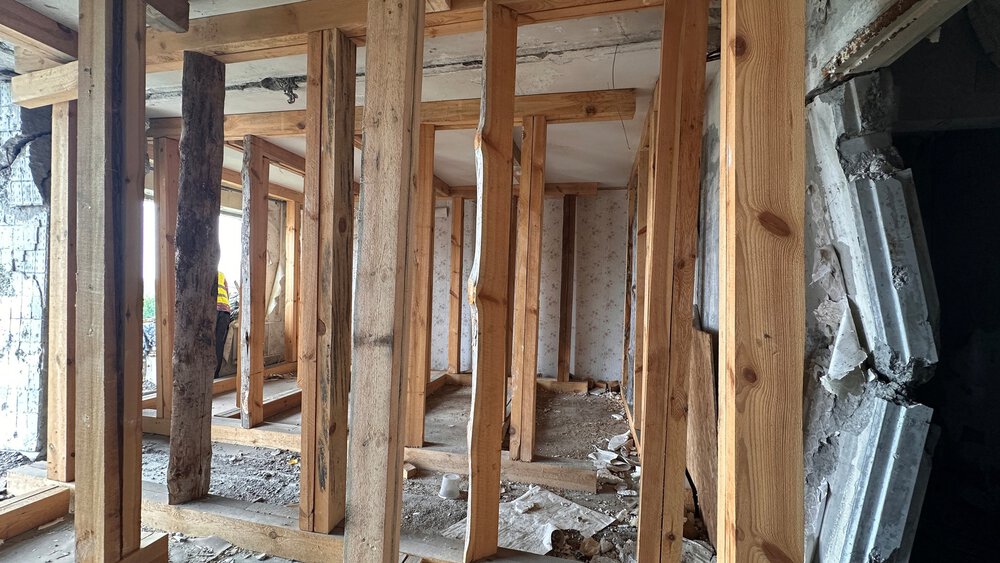
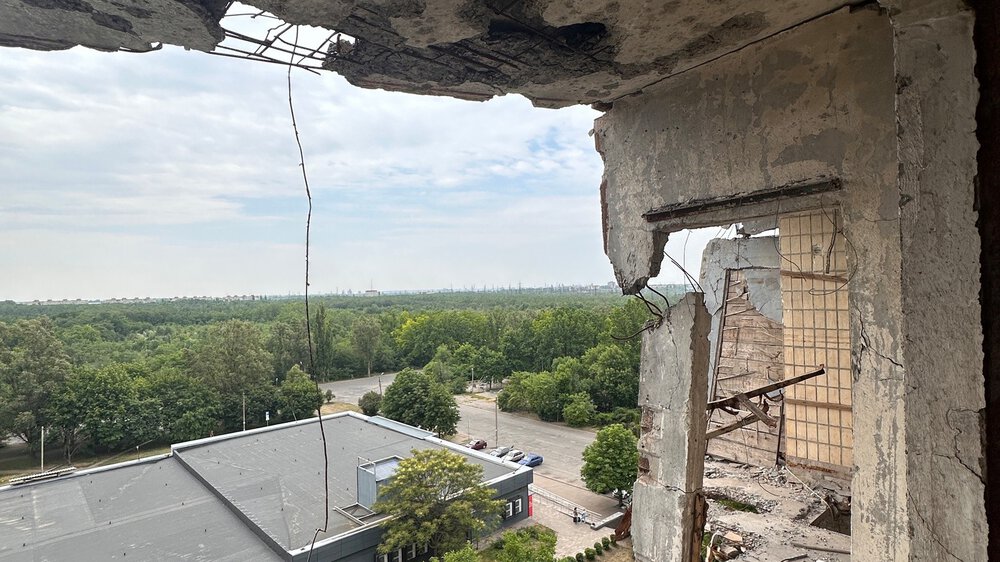
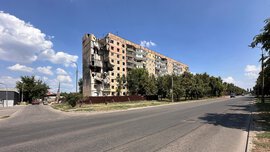
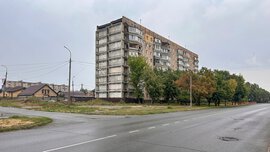
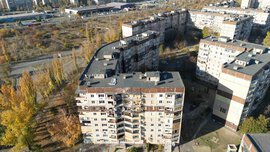
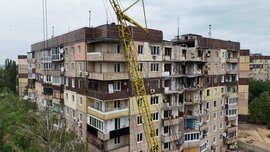
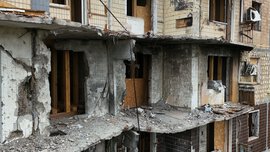
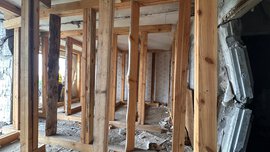
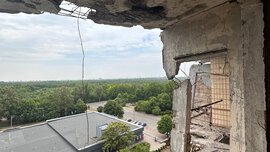
After the war began, we became more involved in networks dealing with the resilience of Ukrainian cities—physically, culturally and in terms of planning. This led, among other things, to the ‘Histories of Ukrainian Architecture’ project. In response to a GIZ call for proposals to strengthen urban resilience, we applied for a pilot project, evaluated buildings and were awarded the contract. This is how the project in Kryvyi Rih came about. There, we are working with local partners on a Soviet-style prefabricated building, specifically a type from the 94 series, with the aim of intelligently restoring the building instead of rebuilding it. This means that we are securing the supporting structure and the building envelope. It is not about a complete renovation or a design statement. Our goal is to gain insights for the entire Ukrainian housing stock from a damaged standard building. Around 70% of these buildings date back to the Soviet era and were already in need of renovation before the war.
What does that mean in concrete terms, beyond the symbolic architecture?
Philipp Meuser: We deliberately use the term “rehabilitation”. This is not just any term, but reflects the logic behind the funding: it is about transitional assistance and not long-term transformation. Energy-efficient renovation is not part of the programme, but we do take it into account. For example, windows are installed in such a way that they will fit correctly in an insulated façade later on. Every intervention should enable subsequent steps, not block them.
The term ‘building back better’ may be hackneyed, but in Ukraine it is being put into practice. Every day, decisions have to be made: do I want to do it the traditional way or differently? In an earlier project, for example, an interior wall became an exterior wall. We suggested hemp instead of external thermal insulation composite systems, an idea that was initially welcomed but then limited by building standards. Nevertheless, things are changing. In a city like Kryvyi Rih, other things are a priority: water, electricity and heating. Climate protection, recycling and reuse play a role, but they are not at the top of the list of priorities.
What challenges characterise the reconstruction—on and off the construction site?
Philipp Meuser: Material and skilled labour shortages are real problems: two-thirds of construction workers are deployed on the front line. However, the biggest challenge is today's safety standards. European rules apply on our construction sites. Steel cables on roofs for tethering, discipline and clear procedures were not a matter of course in post-Soviet construction. Today, this is standard practice. This represents enormous progress. However, the complexity does not end at the construction fence. The ownership structures are complicated. Our pilot project, for example, involves 172 flats in a homeowners' association. The land belongs to the city, the building envelope to the residents. Everyone is doing something: balconies are being glazed, facades insulated. The result is a legal and design patchwork landscape. Nevertheless, it is also clear that people are taking action. They are taking responsibility. We must take this reality of life seriously in our planning.
What does resilience mean—in architecture and beyond?
Philipp Meuser: Resilience is not a formula, but an attitude. In Ukraine, I encounter a young generation of architects who think ahead: climate issues, circularity, recycling, participation. These topics are not a side issue there, but a necessity. They arise from the crisis. The attack has shaken up the old construction industry. Now new ways of thinking are emerging. International programmes don't just give money, they demand processes: How are residents involved? How is construction waste separated? How does social learning take place? Of course, building standards are often not yet up to scratch. But that's exactly where the transfer of know-how begins. And that's exactly what we mean by resilience: intellectual resilience.
What structural insights can be gained from the project for the future?
Philipp Meuser: The project is a microscope for serial construction. We are learning that it is not the type of series that matters, but the type of construction—whether large panels, brick or skeleton construction. Large panel construction means: welded, but dismantlable after separation of the weld seam and socially demanding. Because people still live in the middle of it. Building services are a chapter unto themselves: the old single-pipe system no longer transfers heat as soon as one segment fails. We will therefore replace it with a two-pipe system. This is not a design gesture, but serves functional resilience.
No one knows how to renovate a prefabricated building destroyed in the war. We learn by doing. All our experiences are being compiled into a handbook that is intended to be scalable—for Ukraine and beyond. After all, 70% of the existing buildings are industrially manufactured. For decades, it was used without any maintenance. Now is the opportunity for methodical renewal. Ukraine can become a pioneer in this field. This is also because the issues we are working on there affect us all: existing buildings, climate adaptation and resource conflicts.
What is your vision for reconstruction in Ukraine and beyond?
Philipp Meuser: In five years, I hope that we will no longer be talking about restoration, but about transformation. Ukraine has the opportunity to become more modern than many EU countries through targeted investment. Not ‘despite the war’, but because something better can come out of it. Part of our mission is to produce a handbook that makes the findings from the pilot project accessible. It is not purely a technical manual, but a learning system. Germany can also learn from this: how do we deal with prefabricated buildings? How do we ensure supply, resilience and adaptability? A look at history can also help here: after the Second World War, low-density settlements were also built in Germany for protection reasons. Today, we are once again faced with the question of what robust, socially sustainable and climate-friendly reconstruction could look like. Ukraine could become an international laboratory for resilient construction in the 21st century.
Curriculum Vitae
Dr Philipp Meuser (born 1969) is an architect and university lecturer specialising in modular construction and industrial housing construction. As an internationally recognised expert, he advises politicians and authorities on issues relating to serial construction. With over 20 years of practical experience in this field, he has been involved in numerous projects both in Germany and abroad. Meuser's architectural history studies and handbooks have made a significant contribution to the research and evaluation of the heritage value of industrial housing. In Ukraine, Meuser is currently involved in the rehabilitation of prefabricated buildings destroyed during the war.