

Weleda Cradle Campus: Sustainable building with clay and wood

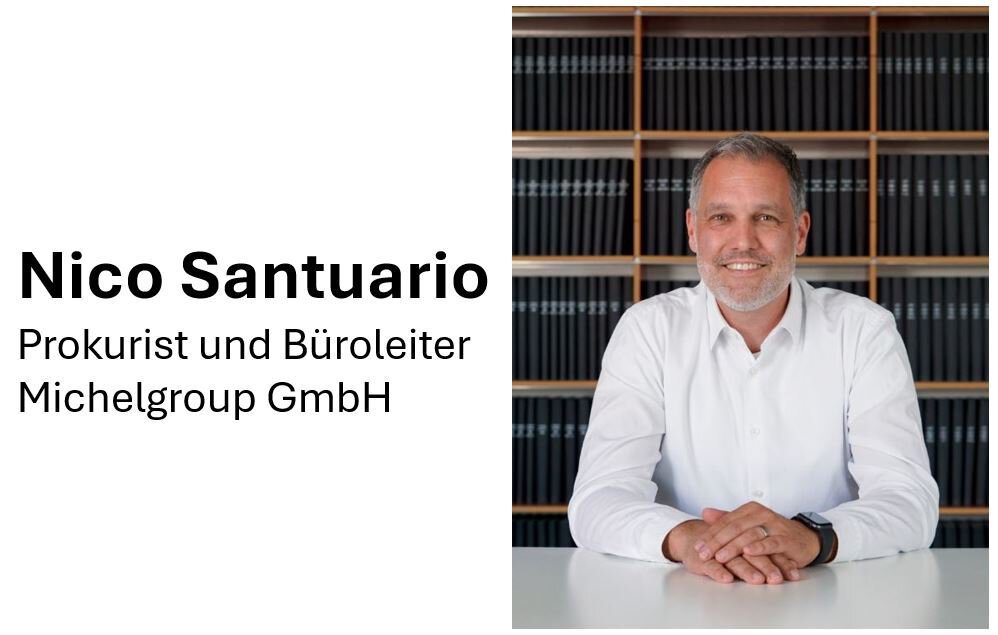
Interview with Nico Santuario, authorised signatory and office manager Michelgroup GmbH
What does logistics look like when it is visionary instead of just efficient? With the Weleda Cradle Campus, architecture firm Michelgroup shows how a building can become a statement for a sustainable future. The project was awarded the International Architecture Award® in 2025 in the “Industrial” category – a recognition of its holistic and innovative approach. In this interview, we talk about courageous builders, clay tampers from all over Europe and why sustainability should not be reduced to technology and energy saving.
How did the project develop from the originally planned logistics building into a beacon of sustainable industrial architecture?
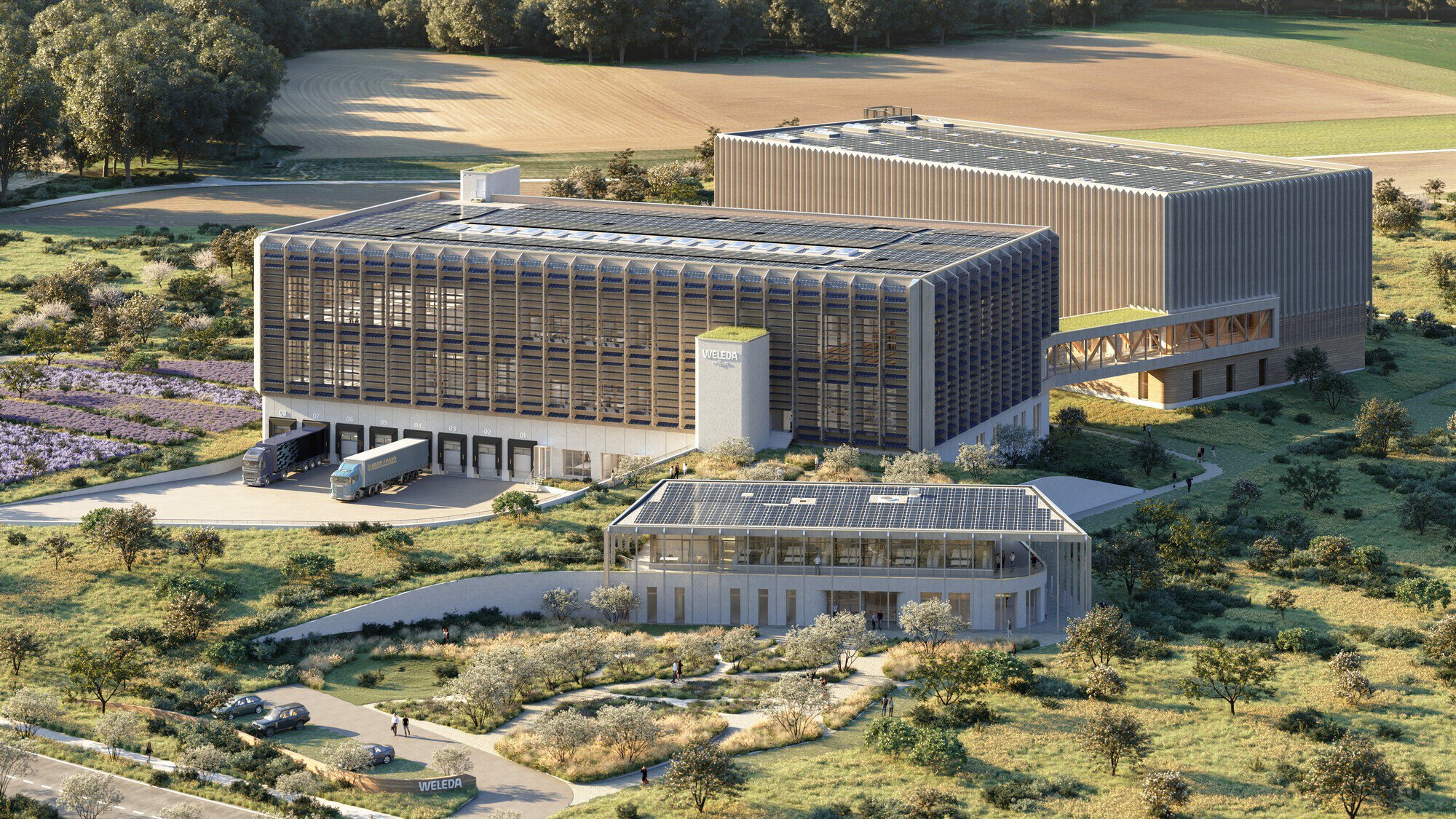
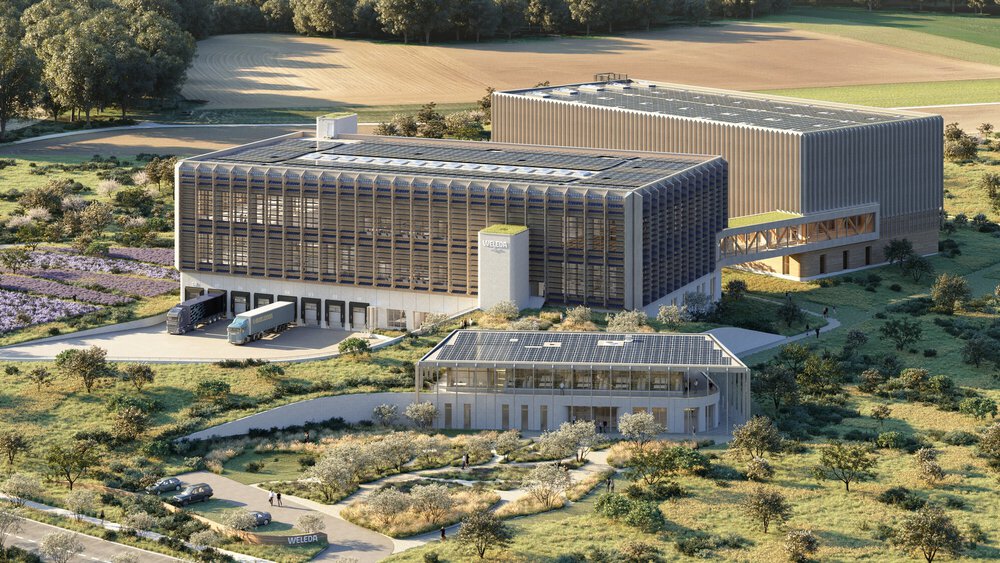
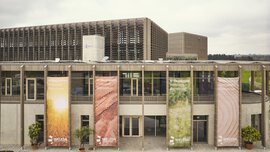
Nico Santuario: The project was originally planned as a classic logistics building focussing on efficiency and technical functionality. A specialised logistics planner accompanied the project. We were initially brought in to provide support, but it soon became clear that this approach did not go far enough for Weleda. The company wanted a building that visualised what it stands for: For closeness to nature, responsibility and the aspiration to do business in a sustainable way. This change of perspective fundamentally changed the project: A purely functional building became a strategic vision. The aim was to create a building that not only optimises processes, but also demonstrates attitude. The triad of ecological, economic and social sustainability became the guiding motif.
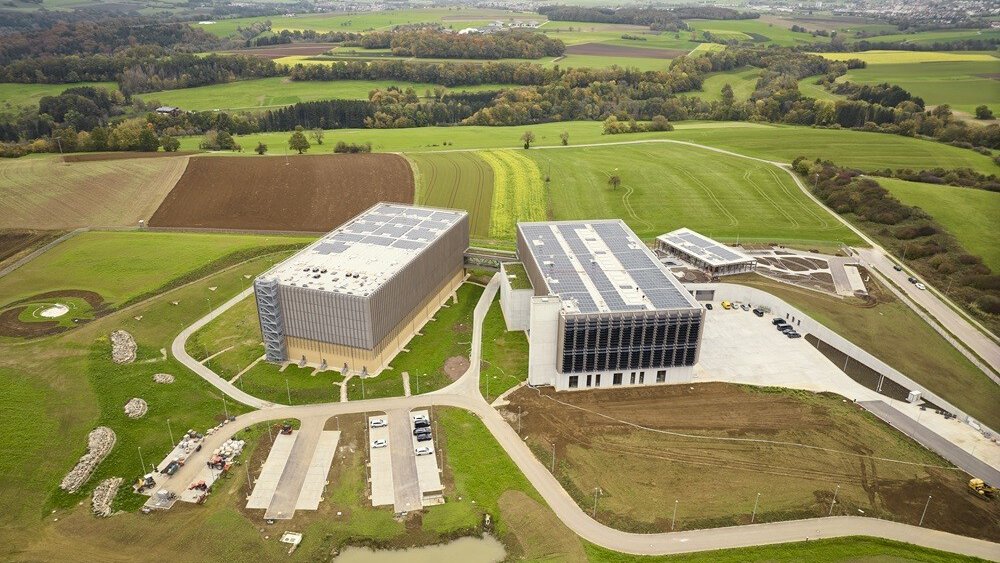
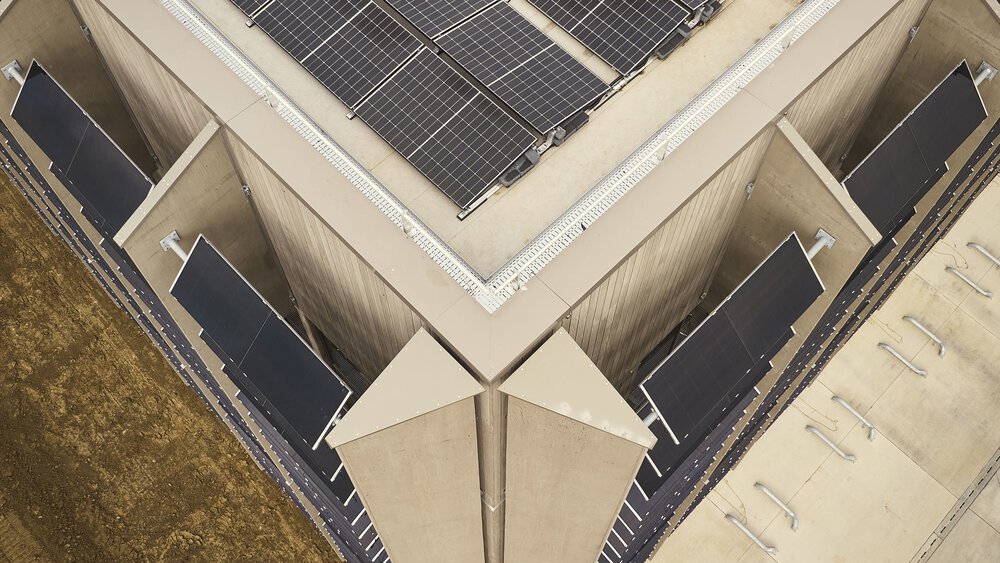
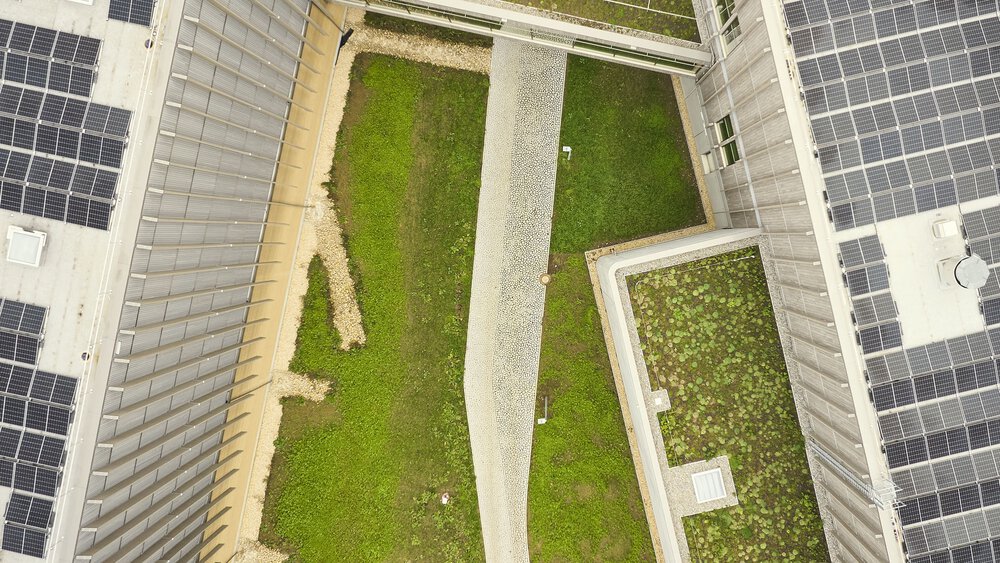
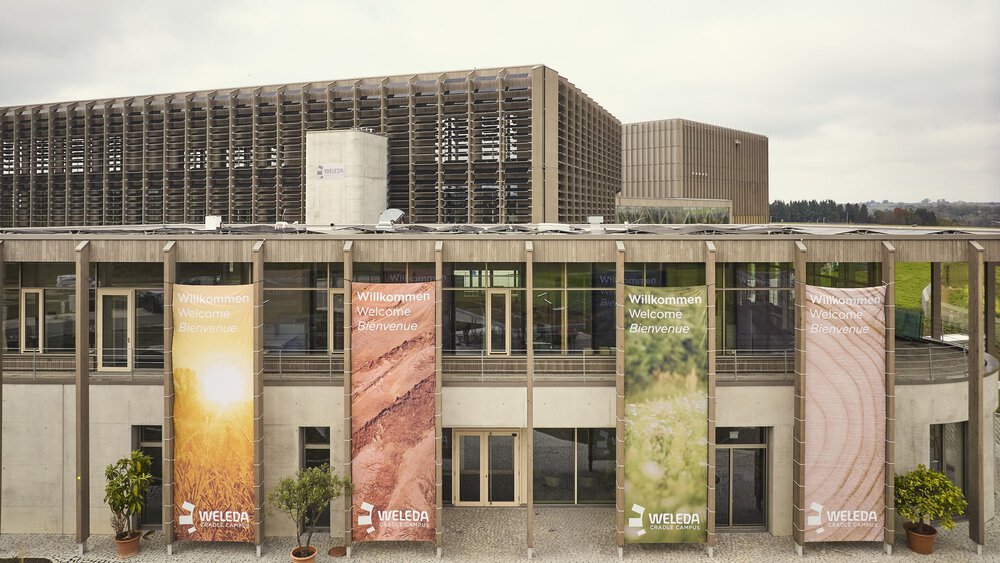
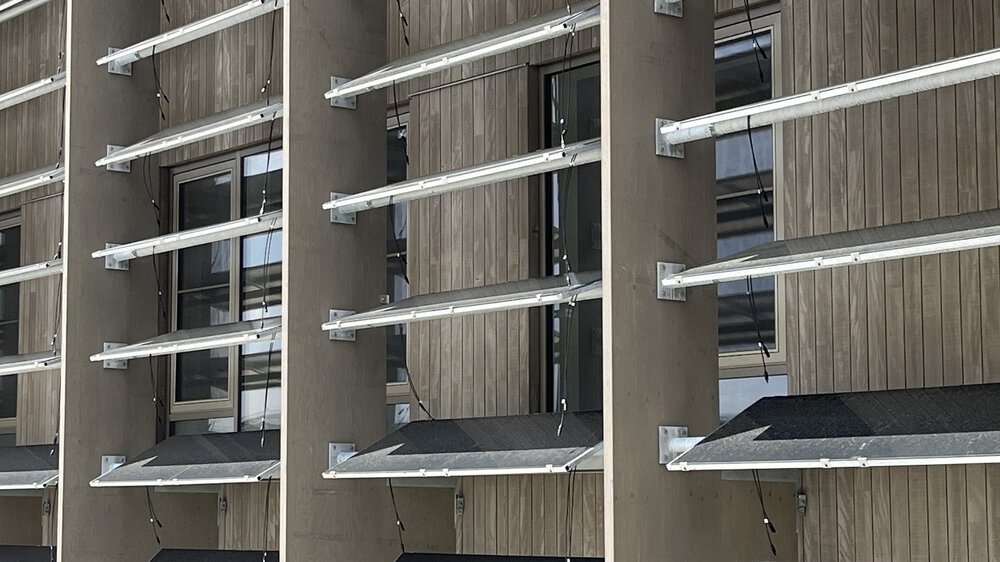
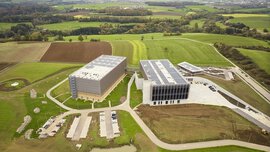
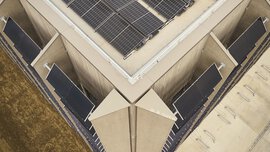
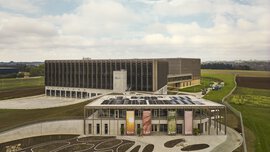
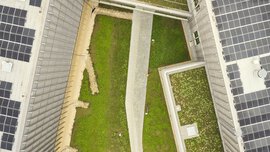
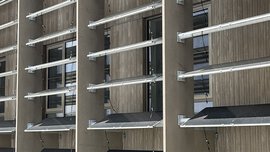
We have chosen materials that embody these values, especially wood and rammed earth. 80 per cent of the site has been renaturalised and the energy comes from geothermal energy and photovoltaics. The term ‘Cradle Campus’ was only introduced later by the new CEO Tina Müller, who strengthened the cradle-to-cradle principle in terms of communication. Principles such as deconstructability, material health and recyclability were integrated into our planning right from the start. Our goal was clear: a building that fulfils the highest standards of sustainability. The Transsolar team was a strong and innovative partner at this point. The DGNB platinum certificate was therefore the logical next step. Today, the Cradle Campus stands for a new attitude in industrial architecture and shows what is possible when sustainability is not seen as an add-on, but as a starting point.
How did the choice of material become an architectural statement—and what role did technology play in this?
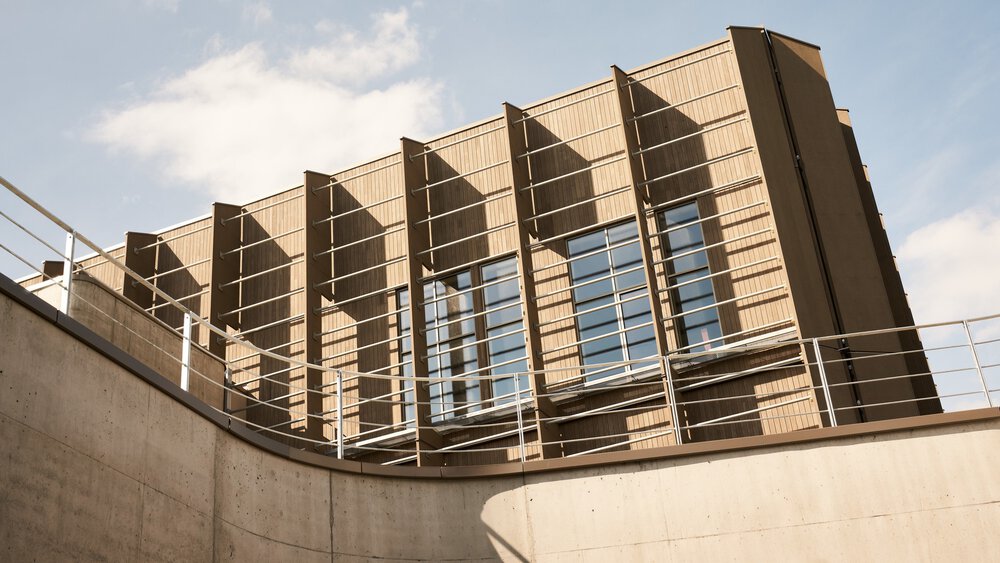
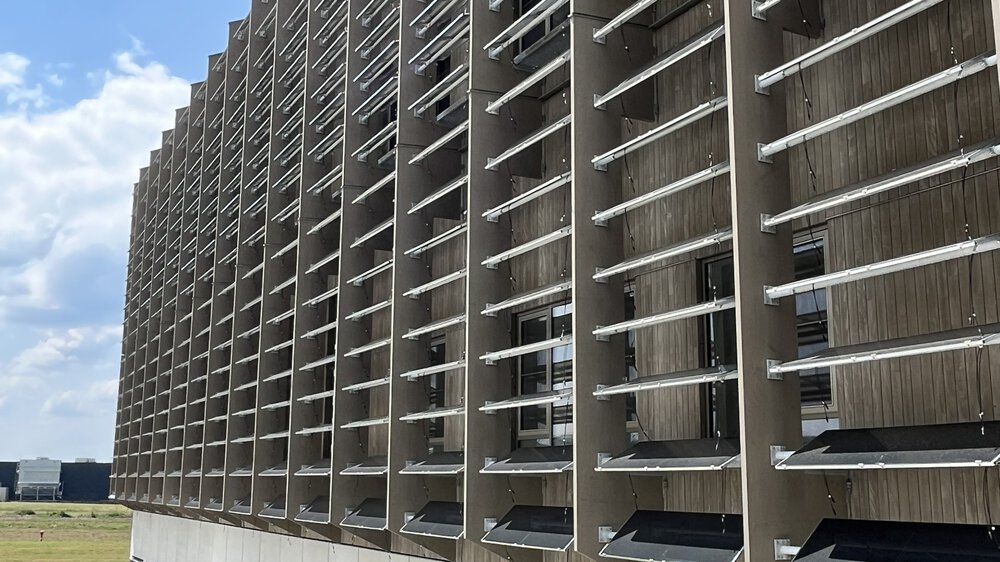
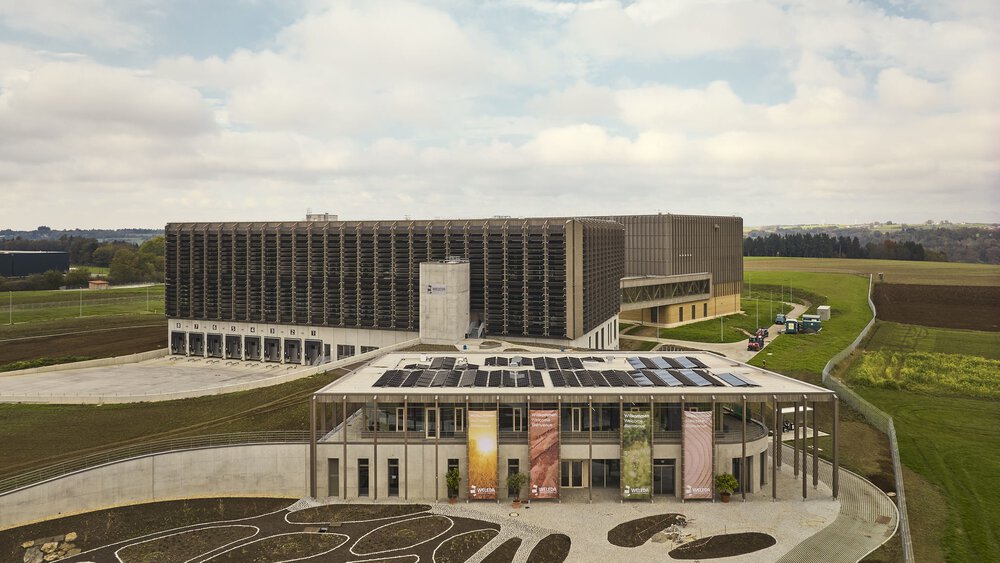
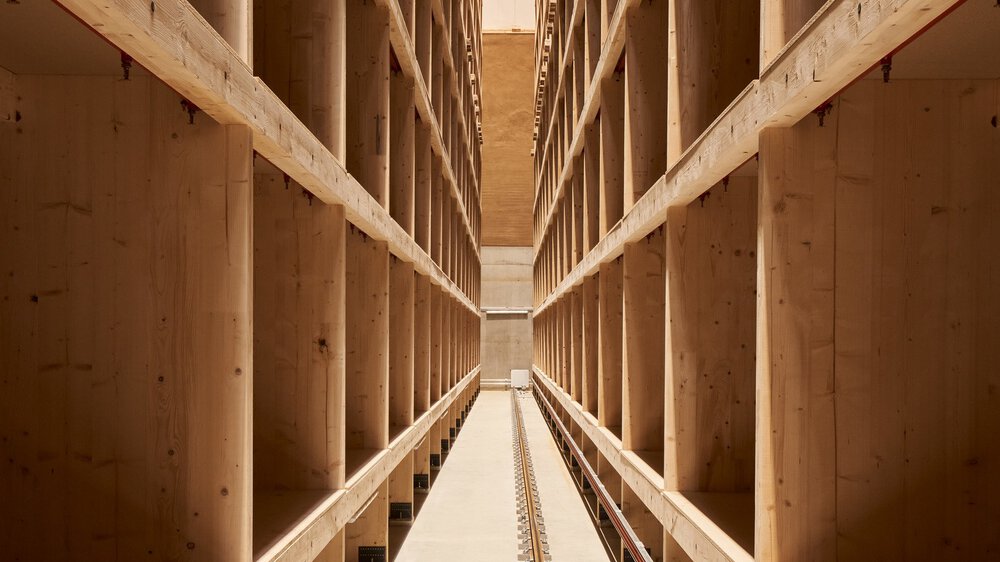
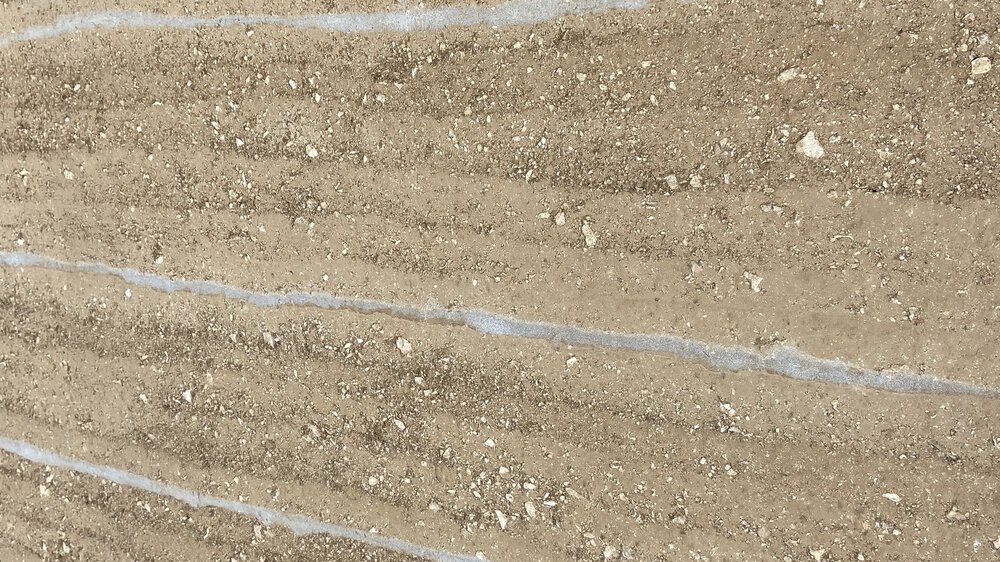
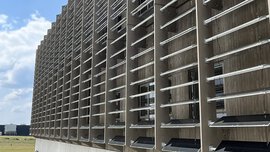
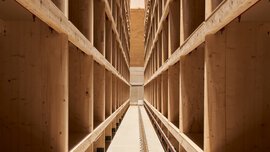
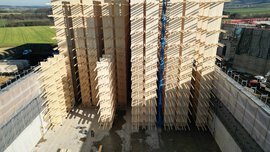
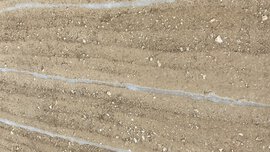
Nico Santuario: We deliberately wanted to break away from the typical image of logistics buildings. That's why we opted for natural materials such as wood and rammed earth. These are not only sustainable, but also have a sensual quality. The clay came directly from the excavation pit, was processed on site and then reused - in other words, a true circular economy. Of course, this was not the easy way. There were many technical and formal hurdles, especially with clay construction. We had to apply for an individual licence, carry out tests and dispel many concerns. But that was precisely our aim: to show that low-tech solutions work in complex environments such as industry if they are used intelligently. Almost no conventional building technology is used in the high-bay warehouse: there is neither ventilation nor humidification, as clay and wood regulate the climate naturally. We were encouraged by the fact that this concept even made it possible to obtain a pharmaceutical licence. However, we wanted to impress not only functionally, but also in terms of the atmosphere: with daylight, quality of stay and a healthy indoor climate.
This attitude was also reflected in the planning process itself. Together with Weleda, we developed various scenarios - from pragmatic to ambitious. The fact that the company opted for the bolder option in many cases was not a matter of course. This shows that sustainability and architectural quality are not mutually exclusive, but can actually reinforce each other.
What were the biggest hurdles during planning and realisation?
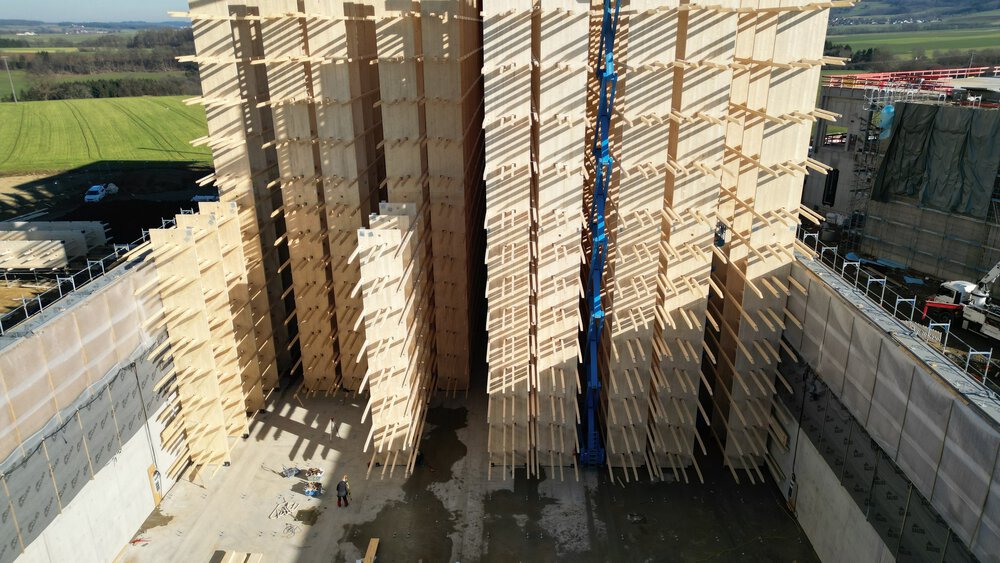
Nico Santuario: The biggest challenge was definitely the clay construction. As there was no standard, we needed an individual licence. The mixture was tested in Berlin and the realisation was carried out by hand by an international team of over 100 people. Our 68-year-old clay builder, who is actually a carpenter, called on people from all over Europe to join him. Many people came because they wanted to be part of something special. They lived, worked and built together on site. It was also extraordinary in terms of organisation. And it went far beyond clay construction: in timber construction, for example, we were faced with complex fire protection requirements. We had to rethink many solutions together with specialist planners. But that is exactly what characterises such projects: not reproducing standards, but actively shaping innovation.
What impact does the Cradle Campus have—both internally and externally?
Nico Santuario: The feedback has been very positive, especially from the people who work there every day. The rooms are bright and friendly and offer a view of the greenery. Weleda involved the employees in the design, for example in the choice of colours and materials. This creates identification and pride. And, of course, the building also sends a clear signal to the outside world: a logistics centre can be more than just functional—it can radiate quality, show attitude and be architecturally ambitious. The multiple awards confirm this and make it clear that sustainability and aesthetics are by no means mutually exclusive.
What directions for the construction practice of tomorrow can be derived from the project?
Nico Santuario: The project shows that it is possible to build differently—ecologically, creatively and socially. However, this requires attitude, courage and partners who go along with it. Weleda didn't just think economically, but also socially—that was crucial. For architecture, this means that our role is changing. We need more than just specialised knowledge, we also need to be able to understand processes, communicate complex issues and win over clients for new approaches. It is no longer enough to work through functional standards. We have to be convincing—with quality, with arguments, with sense.
Background information
Project data
- Client: Weleda AG Arlesheim, Switzerland represented by Weleda Immobilien GmbH
- Architecture: Michelgroup
- Sustainability strategy: in collaboration with Transsolar Energietechnik GmbH
About Weleda
Weleda AG, headquartered in Arlesheim near Basel, is a global leader in the production of certified natural cosmetics and anthroposophic medicines. As a B Corp-certified company with around 2,500 employees in over 50 countries, Weleda is committed to biodiversity, healthy soils and a holistically sustainable economy.
About Michelgroup
Michelgroup is an internationally active office for architecture, urban planning, interior design and strategic design with offices in Germany and Switzerland. The interdisciplinary team develops context-specific concepts for liveable spaces and accompanies projects through all phases of planning and realisation, regardless of size or complexity.